Apparently I'm bad about updating out here in Cali... Well, here's to trying to be better about this!
Something I've been thinking about a lot recently is community - it is both hard to find and vital to make when moving to a new place. This awareness makes me even more grateful for aikido. In Rochester, the dojo was one of the strongest communities I found - my family away from home. Now that I switched coasts, I've been even more overwhelmed - the fledgling community here welcomed me with open arms, and I have been working hard to help them grow into something sustainable and full of vitality.
So, why does aikido allow for such a feeling of community? I think that one of our newest members hit the nail on the head when he mentioned why he was planning to stick with us. He said that it was obvious our practice was based in a pure love of the art, which made the practice atmosphere seem friendly and collaborative. This is exactly what we're going for - as I've discussed before, I see the theme of victory over oneself as central to aikido, which means that you are only competing against yourself. Other people in the dojo, whether more or less experienced, can only help with that goal.
In my view, this collaborative kind of atmosphere is vital for any sort of study. In my life as a grad student, I am at my most productive when talking with colleagues about a whole range of topics - to me, cutthroat competition only hinders effectiveness, whereas collaboration always allows for new perspectives and ideas to flourish. This approach also correlates with the aikido goal of a holistic approach to life, with no part neglected. By building a community, rather than a group of working enemies, mental health and growth is facilitated, along with work. This in turn leads to even more productivity!
To me, the dojo can be a template for other social interactions. In the dojo, uke and nage each try to improve their role, and constantly switch off, preventing any sense of a constant attacker. The less and more experienced people work together, and both have the mindset of learning from the other. Instructors look forward to taking classes with other sensei's, so that their own practice can continue to grow and they can develop new ways to present materials to their own students. To me, this maps well onto ideal work situations - in academia, professors can learn from their students' fresh perspectives, and can keep friendly conversations alive with colleagues in their own departments and out. This is certainly the type of atmosphere I'll work to cultivate in my life - both the dojo and my future classroom.
Thursday, October 22, 2015

Friday, October 2, 2015
Train to Not Use It
Almost every non-martial artist I mention aikido to asks one question: "Have you ever used it???" To me, there are two answers to this question. The answer I actually believe is yes: I use it every day, and strive to use it every waking second. If you're not sure what I mean by that, go read my prior posts to get some ideas. The answer to the question they really mean, though, is no: I have never used it in a physical conflict situation. And I hope I never have to.
This is the answer that nearly every martial artist I know gives; particularly that last part. Aikido strives for non-violence, but we all know that if we were attacked, the pavement around us would cause rather serious damage. Friends of mine who train in "harder" martial arts (force-wise, not skill-wise!) go even further - one person confessed to me that if she were ever actually attacked, she'd be afraid of killing her attacker, because the defenses that come most naturally to her are things like throat-jabs, which are effective, but very difficult to rein in!
This is why, across most martial arts, the phrase "We train so that we never use it," can be applied. We don't just learn to use our bodies as (offensive or defensive) weapons, but also the discipline not to physically start or verbally instigate a fight. In aikido at least, we learn to moderate our responses, so if someone attacks us, we can lay on a different level of hurt to a belligerent drunk than to an armed mugger. We may even learn to verbally diffuse conflicts before they escalate to a level of physical violence. By training, we learn to respect our bodies' potential to cause damage.
 If you haven't figured it out by now, this is my second ever politically-relevant blog post. Something that strikes me in all gun control debates is how little guns seem to be recognized as a legitimate martial pursuit, and on the flip side, needing the high degree of training that we all go through. Honestly, I'd love to be one of the people who says we should just ban guns entirely. Statistics in gun-free countries show that even among criminals, gun deaths become negligible. Indeed, a couple of years ago, there was a knife incident in a Chinese school the same day as as a shooting in an American school - embarrassingly, we've had so many that I can't even remember which it was! But, the point being, a dozen or so Americans were killed that day. As many Chinese were injured, but not one fatally. It's harder to kill as an amateur knife-wielder than as an imbecile with a semi-automatic. The harder it is for people to have personal access to said semi-automatics, the harder it is to kill people. Yes, I realize that it is still possible, but the syllogistic logic remains sound.
However, keeping me from that camp is my experience of those I'll call respectful gun owners. These are people who respect their weapons and what those weapons can do. They train guns the way I train aikido (ok, nearly all of them I can think of personally are/were also open-hand martial artists, but still...), and I have no hesitations about their trustworthiness when armed. One takes such a holistic approach that she even makes her own bullets. Because they get the same meditative joy out of their craft as I do out of mine, I have a hard time making a blanket statement that their passion is less valid than mine.
So, to wrap up my extremely ambivalent thoughts, some more ambivalence: yes, I do think guns kill people. They are devastating weapons, and even badly aimed can shatter bone, puncture organs, etc, to a much greater degree than other weapons poorly used. More guns, in my opinion, means more chances that the wrong person will get ahold of them, and have more chances to kill people (the Oregon shooter had a collection of THIRTEEN!). However, I also think that people kill people. Some large number of people seem to be brought up without any understanding that guns are mortal weapons, which allows them into the hands of both the untrained and unhinged (for the former, https://www.washingtonpost.com/local/crime/three-year-old-girl-dead-after-shooting-in-southeast-washington/2015/07/30/9ec511c6-36a1-11e5-b673-1df005a0fb28_story.html). As martial artists, we train for years in order to not use our skills. Perhaps more recreational gun users need to learn the same lesson.
NB: Before anyone starts commenting furiously, I was not trying to make any sort of policy suggestions here! I certainly have some amorphous thoughts on that, but my dominant point is simply that anything with lethal potential should be respected.
Tuesday, September 15, 2015
Looking Forward
I had an absurd experience at a coffeeshop last week, where a woman who had been sitting near me for 2 hours suddenly started spouting hate speech against Jews, apparently continuing a conversation she'd started with a third person while I was in the restroom. (Person 3 was leaving as I got back, so I had no context.) I engaged the woman, but was torn among 1) honestly trying to educate her, 2) not leaping across the couches with a very non-aikido response, and 3) just trying to disengage and go back to my reading (difficult because she kept talking to 'clarify' her point, or at least not sound like a complete a@#%$^!). All of this was overridden by the most forceful responses: a huge adrenaline rush, and the complete shock of a normal-looking woman with some hippie juice drink suddenly engaging me in hate against my own culture, and obviously expecting me to agree with her.
After all of this ended (with her suddenly packing up and leaving!), I found myself mentally unable to disengage. Over the next several hours, days, and even now, I've found myself replaying the scenario in my head. How many more productive things I could have said to make it a teaching moment! (How many more witty comebacks, though that is less productive...) Yes, I pointed out that the person she'd been peacefully working near all afternoon was in her demonized group, but other than probably making her feel like a jerk and hopefully spawning some self-study, I was not the best cultural ambassador. In my imagination, I've seen so many better scenarios where I engaged her in a Socratic dialogue and helped her to see the absurdity of her own prejudices and hatreds.
But this isn't productive.
Something I've tried to stress in my recent Aikido classes is not beating yourself up. Most students (myself included) find themselves at least once a class beating themselves up over a particular technique or throw. Teachers of any field have probably seen this happen: a sudden sign of disappointment like a head shake or "tsk" sound, mounting frustration, and then a complete inability to do better. That last part, at least in the dojo, is nearly always caused by that instant-repeat feature. The student gets so caught in what went wrong and how they could have done it better, they forget to focus on how to move forward, how they can do it better now.
It is a delicate balance, I think. Past mistakes must be learned from, and that often comes from analyzing reactions and considering how you can do better. But, when that reviewing gets in the way (whether of performing a technique again 30 seconds later, or of facing life with a quiet mind a day/week/month later), it becomes a liability.
Ironically, this happened to me the week before the Jewish High Holy Days began. Rosh Hashanah, which ended today, is the New Year, and Yom Kippur next week is the "Day of Repentance," when Jews evaluate their poor choices, cruel deeds, etc, and ask forgiveness. In the 10 days in between, human forgiveness for those things is supposed to be sought from peers before turning to a higher power for spiritual and unforgiven wrongs. To me, the holiday weeks highlight the importance of what I've been saying in this rather lengthy post. I always see the holiday season as helping with this type of purgation process. For me at least, it is always a time to forgive myself for things I've dwelt over for far too long. I tend to see myself as a "bad person" when I'm cranky at someone, or have a self-centered day. The days of repentance and self-searching help to remind me that I am just a ... person.
I think that is the idea I want to emphasize in this post. Whatever goes wrong, whether it is a poorly executed technique, or snapping at a loved one, or not handling a conflict with a stranger optimally, that is not a value judgment. In aikido, it means that we are all students, not that I am terrible at aikido or that you are hopelessly uncoordinated. In life, it means we are people - flawed people who have emotional human reactions, and can only hope that when facing that situation again, we act with more dignity and grace than before.

After all of this ended (with her suddenly packing up and leaving!), I found myself mentally unable to disengage. Over the next several hours, days, and even now, I've found myself replaying the scenario in my head. How many more productive things I could have said to make it a teaching moment! (How many more witty comebacks, though that is less productive...) Yes, I pointed out that the person she'd been peacefully working near all afternoon was in her demonized group, but other than probably making her feel like a jerk and hopefully spawning some self-study, I was not the best cultural ambassador. In my imagination, I've seen so many better scenarios where I engaged her in a Socratic dialogue and helped her to see the absurdity of her own prejudices and hatreds.
But this isn't productive.
Something I've tried to stress in my recent Aikido classes is not beating yourself up. Most students (myself included) find themselves at least once a class beating themselves up over a particular technique or throw. Teachers of any field have probably seen this happen: a sudden sign of disappointment like a head shake or "tsk" sound, mounting frustration, and then a complete inability to do better. That last part, at least in the dojo, is nearly always caused by that instant-repeat feature. The student gets so caught in what went wrong and how they could have done it better, they forget to focus on how to move forward, how they can do it better now.
It is a delicate balance, I think. Past mistakes must be learned from, and that often comes from analyzing reactions and considering how you can do better. But, when that reviewing gets in the way (whether of performing a technique again 30 seconds later, or of facing life with a quiet mind a day/week/month later), it becomes a liability.
Ironically, this happened to me the week before the Jewish High Holy Days began. Rosh Hashanah, which ended today, is the New Year, and Yom Kippur next week is the "Day of Repentance," when Jews evaluate their poor choices, cruel deeds, etc, and ask forgiveness. In the 10 days in between, human forgiveness for those things is supposed to be sought from peers before turning to a higher power for spiritual and unforgiven wrongs. To me, the holiday weeks highlight the importance of what I've been saying in this rather lengthy post. I always see the holiday season as helping with this type of purgation process. For me at least, it is always a time to forgive myself for things I've dwelt over for far too long. I tend to see myself as a "bad person" when I'm cranky at someone, or have a self-centered day. The days of repentance and self-searching help to remind me that I am just a ... person.
I think that is the idea I want to emphasize in this post. Whatever goes wrong, whether it is a poorly executed technique, or snapping at a loved one, or not handling a conflict with a stranger optimally, that is not a value judgment. In aikido, it means that we are all students, not that I am terrible at aikido or that you are hopelessly uncoordinated. In life, it means we are people - flawed people who have emotional human reactions, and can only hope that when facing that situation again, we act with more dignity and grace than before.
Wishing a good and sweet year to everyone, whether you count it from Monday or any other day!
Friday, August 28, 2015
Thinking In Circles
This past week, I taught my first class for Aikido Kokikai OC! I played around with teaching a bit, since it was just myself and one advanced student. I did an experiment, and I think it worked! We were breaking down some of the more "basic" techniques, because the devil is in the details with those. After a while, I could tell that we were both getting frustrated: why did basic tsuki kokyunage (timing throw from a punch) feel so awful to a brownbelt and a blackbelt?! So, what I suggested that we do was stop practicing the throw slowly, and just throw sets as quickly as possible, focusing on breathing. I even had us sing while throwing, both to illustrate the principle of "one-breath throw" (a near-translation of kokyunage), and to distract us even more from form. When we went back to slowing things down a few minutes later, some of the problems were more exaggerated and therefore easier to spot and fix, and I think we both were able to face the issues with a clear mind.
Though it is always awesome when teaching works exactly the way you hope, I use this not to brag, but actually to demonstrate a personal failing: when I am too close to the nitty-gritty of a problem, I tend to get caught up in it, unable to see a way out. I think this is why taking breaks, varying attack, talking to other people for their thoughts, etc, are such useful strategies.

This week also marked one of the first times I've really gotten down to work since my move, rather than just fussing through this and that. The way I got through it was forcing myself to use "Pomodroido" on my phone. This app uses the Pomodoro technique - it chunks time into 25-minute work sessions and 5-minute break sessions. I have the basic version, which doesn't block anything else, but since I started using it about a year ago, I've found that just having the timer sitting there helps me keep focus. Looking at "I have to get a ton done today and read this whole stack of books!!!!" always sends me into the sort of tailspin that means very little gets done, outside of a lot of Facebook browsing. Focusing on reading one chapter, or however much I can read, for a solid 25 minutes is easy, though. In my 5 minute breaks, I try to vary my activities entirely - play a round on Duolingo to think in Spanish for 5 minutes, get tea, check that same devilish Facebook, respond to e-mails, etc. Shifting my focus entirely for a few minutes always helps me get a clearer head so that I can focus entirely again for my next 25-minute chunk.
All of this is to say that personally, getting too fixated on tasks can be harmful, whether that fixation is on nit-picking a technique (or a paper), or on how much needs to get done. In aikido, we like circular motion, but I don't think circular thinking works nearly so well. For me, changing the topic and clearing the mind works so much better - it enables the return to a state of focused mu shin, or no-mind, which in turn enables productive work.
Though it is always awesome when teaching works exactly the way you hope, I use this not to brag, but actually to demonstrate a personal failing: when I am too close to the nitty-gritty of a problem, I tend to get caught up in it, unable to see a way out. I think this is why taking breaks, varying attack, talking to other people for their thoughts, etc, are such useful strategies.
This week also marked one of the first times I've really gotten down to work since my move, rather than just fussing through this and that. The way I got through it was forcing myself to use "Pomodroido" on my phone. This app uses the Pomodoro technique - it chunks time into 25-minute work sessions and 5-minute break sessions. I have the basic version, which doesn't block anything else, but since I started using it about a year ago, I've found that just having the timer sitting there helps me keep focus. Looking at "I have to get a ton done today and read this whole stack of books!!!!" always sends me into the sort of tailspin that means very little gets done, outside of a lot of Facebook browsing. Focusing on reading one chapter, or however much I can read, for a solid 25 minutes is easy, though. In my 5 minute breaks, I try to vary my activities entirely - play a round on Duolingo to think in Spanish for 5 minutes, get tea, check that same devilish Facebook, respond to e-mails, etc. Shifting my focus entirely for a few minutes always helps me get a clearer head so that I can focus entirely again for my next 25-minute chunk.
All of this is to say that personally, getting too fixated on tasks can be harmful, whether that fixation is on nit-picking a technique (or a paper), or on how much needs to get done. In aikido, we like circular motion, but I don't think circular thinking works nearly so well. For me, changing the topic and clearing the mind works so much better - it enables the return to a state of focused mu shin, or no-mind, which in turn enables productive work.
Sunday, August 16, 2015
Page Loading...
Sometimes, life hasn't caught up to thought. Right now, I'm in one of those spots. I'm waiting for my new dojo to take off (more on that later!), I'm waiting to get a library card at my husband's new university because I'm waiting to get some books, I'm waiting to get closer to my new friend group here which means waiting for our schedules to align in any reasonable type of way, I'm waiting to get in touch with the right people to send out feelers for future jobs... It feels like almost everything in my life is on pause for now, and I can't do much but sit it out.
But this is ok, as long as I'm ready for everything to start moving again. In aikido, there is a lot of waiting, though much of it is only for seconds at a time.

For example, in aikido, we follow the theory of "control the first move." This means that a practitioner never hits first, but can do her utmost to make sure any violence happens in an expected way. Thus, we learn to present an arm for a grab, because most attackers will grab a convenient target for example. On a more basic level, controlling the first move without making the first move simply means waiting for the other person - knowing when the ideal time is to react, and ensuring that the rapid reaction will be there when that first move is made. For me right now, this sort of thing translates to getting my job materials ready. I don't know when I'll get to talk to someone about a future post, but whenever that is, I will have sample syllabi to hand them!
One major subset of throws in aikido are kokyunage throws. I have heard this term glossed as "single breath" throws. In general, though, these throws rely on timing. Timing does not just mean knowing when to touch uke and act upon them, however. It also means the space between those movements. If nage acts too quickly, uke will have the chance to change the attack, or their momentum won't be in the right place for manipulation. Similarly, some of our longer, showier throws ("mat techniques") such as katatetori kokyunage (wrist grab timing throw) involve a lengthy pause while uke is moving around nage's static body. If nage moves, the motion of the throw will be changed, and it won't be as powerful.
What I see as the lesson here is that sometimes, waiting is useful, or at least not harmful. Things have to happen in their proper order, and can't be rushed before that. So, my challenge this week to myself and to you is to try to be more patient. Accept waiting, while preparing for action. This can make action more forceful, when it finally does happen. It also makes the intermediate time much less stressful and tense!
Now, a quick change of topic: I have a new dojo! Aikido Kokikai Orange County is just starting to become more official, so please look us up on various media, follow us, review us, and join us! So far, you can find us on Facebook (https://www.facebook.com/aikidokokikaioc and https://www.facebook.com/groups/119960775015748/), Yelp (http://www.yelp.com/biz/aikido-kokikai-orange-county-newport-beach), and Meetups. There will certainly be a lot of cross-talk between that experience and my blog, as I will be cross-promoting obnoxiously, and surely getting much of my blog inspiration from my new training friends.

But this is ok, as long as I'm ready for everything to start moving again. In aikido, there is a lot of waiting, though much of it is only for seconds at a time.
For example, in aikido, we follow the theory of "control the first move." This means that a practitioner never hits first, but can do her utmost to make sure any violence happens in an expected way. Thus, we learn to present an arm for a grab, because most attackers will grab a convenient target for example. On a more basic level, controlling the first move without making the first move simply means waiting for the other person - knowing when the ideal time is to react, and ensuring that the rapid reaction will be there when that first move is made. For me right now, this sort of thing translates to getting my job materials ready. I don't know when I'll get to talk to someone about a future post, but whenever that is, I will have sample syllabi to hand them!
One major subset of throws in aikido are kokyunage throws. I have heard this term glossed as "single breath" throws. In general, though, these throws rely on timing. Timing does not just mean knowing when to touch uke and act upon them, however. It also means the space between those movements. If nage acts too quickly, uke will have the chance to change the attack, or their momentum won't be in the right place for manipulation. Similarly, some of our longer, showier throws ("mat techniques") such as katatetori kokyunage (wrist grab timing throw) involve a lengthy pause while uke is moving around nage's static body. If nage moves, the motion of the throw will be changed, and it won't be as powerful.
What I see as the lesson here is that sometimes, waiting is useful, or at least not harmful. Things have to happen in their proper order, and can't be rushed before that. So, my challenge this week to myself and to you is to try to be more patient. Accept waiting, while preparing for action. This can make action more forceful, when it finally does happen. It also makes the intermediate time much less stressful and tense!
Now, a quick change of topic: I have a new dojo! Aikido Kokikai Orange County is just starting to become more official, so please look us up on various media, follow us, review us, and join us! So far, you can find us on Facebook (https://www.facebook.com/aikidokokikaioc and https://www.facebook.com/groups/119960775015748/), Yelp (http://www.yelp.com/biz/aikido-kokikai-orange-county-newport-beach), and Meetups. There will certainly be a lot of cross-talk between that experience and my blog, as I will be cross-promoting obnoxiously, and surely getting much of my blog inspiration from my new training friends.

Thursday, August 6, 2015
A Teacher as a Map
I recently got home after an absolutely amazing experience at Kokikai Summer Camp, including testing for and receiving my black belt. Certainly, there will be more to come on that in future, once I've internalized a bit more!
One of the best parts of this camp, for me, was a sudden realization about Sensei's (Shuji Maruyama, the founder of Kokikai, who we all turned out to see) motivations. A part of the camp which I've seen before many times has honestly always irked me: Sensei calls up a strong, stubborn guy for a ki test, throws him easily, and then demonstrates how other strong, stubborn blackbelts cannot throw the same person. While Sensei always emphasizes his smallness and says, "I can do it; you can do it," my perceived message was always the opposite - it always seemed to highlight the apparent inadequacy of some of the fittest, highest-ranked people in the practice. I always wondered why Sensei seemed so fixated on denigrating his own black belts, to the extent that this exhibition occurred multiple times every seminar weekend and camp, sometimes multiple times within a class.
BUT! Finally at this camp, things came together for me. After an entirely different demonstration, Sensei elaborated: (I paraphrase) "You must catch correct feeling. I cannot tell you how to do it, you have to find it yourself. I can be a map and show you how correct feeling works, how to find the way. If you catch the feeling yourself, you do not need the map, but until you do, see what I am showing you."
Suddenly, the rationale behind all of those ki tests became apparent to me. Good aikido is a feeling, and it feels different for everyone. Sure, many of us try to make it metaphorical when explaining to others, but the fact is, it cannot directly be taught. Elements leading towards correctness, yes. But not that tangible embodiment of correct feeling. So, all Sensei can do is take a technique that exemplifies correct feeling to him, and keep showing it. Through this, he can highlight the differences between his own relaxation and the buff men's tendency towards tenseness and conflict.

While this sort of demonstration is still not always my favorite mode of teaching (I'm far too verbal for that - imagine!), I think that it is something that all teachers should be incorporating. As someone who hopes for life as a professor, I spend a lot of thought in teaching, and particularly what made the teachers who inspired me just so inspirational. One thing that I think they all did was this type of leading by example. Tangible things (how to solve an equation, how to pronounce Middle English, how to structure an argument) can be taught through verbal, visual, multimodal instruction. These things take to how-to guides and textbooks very easily. What is not so easily taught, however, is feeling.
I think that this concept of "feeling" enters the classroom in several ways. Perhaps the most important is through passion for a subject. This is not really the feeling Sensei is demonstrating in that it has little to do with bodily configuration, controlled relaxation, etc, but I think is still vitally important. I'm sure everyone can attest to the fact that certain subjects sucked in high school (or middle school, or college) when taught by the person with the monotone voice who seemed to have lost all semblance of passion for anything long ago, and that those same subjects were amazing when taught by engaged people who seemed thrilled to get up and chat about these things inside and outside of the classroom. Passion for a discipline can't be taught or learned through particular steps or from a textbook, but it can be contagious from teacher to student.
Similarly, I think that there is a "correct feeling" for doing the process of academic pursuit. For me, it is a mu shin (no mind) state attained while writing. Ideally, it also includes complete engulfment into texts while reading, but that one is less common for me. I've heard from STEM people that they similarly fall into figuring out problems, getting trapped in their elegance. These feelings too cannot be taught, only learned through experience. Of course, they may not always produce perfect work the way Sensei's good ki produces consistently excellent results, but they are at least a step in the right direction.
I think that in general, there is a lot to be said for the teacher-as-map model, and also for the caveat that if you can find the way yourself, you can discard the map. That latter is not very likely though, so hold on to your maps and value them for everything they show!
One of the best parts of this camp, for me, was a sudden realization about Sensei's (Shuji Maruyama, the founder of Kokikai, who we all turned out to see) motivations. A part of the camp which I've seen before many times has honestly always irked me: Sensei calls up a strong, stubborn guy for a ki test, throws him easily, and then demonstrates how other strong, stubborn blackbelts cannot throw the same person. While Sensei always emphasizes his smallness and says, "I can do it; you can do it," my perceived message was always the opposite - it always seemed to highlight the apparent inadequacy of some of the fittest, highest-ranked people in the practice. I always wondered why Sensei seemed so fixated on denigrating his own black belts, to the extent that this exhibition occurred multiple times every seminar weekend and camp, sometimes multiple times within a class.
BUT! Finally at this camp, things came together for me. After an entirely different demonstration, Sensei elaborated: (I paraphrase) "You must catch correct feeling. I cannot tell you how to do it, you have to find it yourself. I can be a map and show you how correct feeling works, how to find the way. If you catch the feeling yourself, you do not need the map, but until you do, see what I am showing you."
Suddenly, the rationale behind all of those ki tests became apparent to me. Good aikido is a feeling, and it feels different for everyone. Sure, many of us try to make it metaphorical when explaining to others, but the fact is, it cannot directly be taught. Elements leading towards correctness, yes. But not that tangible embodiment of correct feeling. So, all Sensei can do is take a technique that exemplifies correct feeling to him, and keep showing it. Through this, he can highlight the differences between his own relaxation and the buff men's tendency towards tenseness and conflict.
While this sort of demonstration is still not always my favorite mode of teaching (I'm far too verbal for that - imagine!), I think that it is something that all teachers should be incorporating. As someone who hopes for life as a professor, I spend a lot of thought in teaching, and particularly what made the teachers who inspired me just so inspirational. One thing that I think they all did was this type of leading by example. Tangible things (how to solve an equation, how to pronounce Middle English, how to structure an argument) can be taught through verbal, visual, multimodal instruction. These things take to how-to guides and textbooks very easily. What is not so easily taught, however, is feeling.
I think that this concept of "feeling" enters the classroom in several ways. Perhaps the most important is through passion for a subject. This is not really the feeling Sensei is demonstrating in that it has little to do with bodily configuration, controlled relaxation, etc, but I think is still vitally important. I'm sure everyone can attest to the fact that certain subjects sucked in high school (or middle school, or college) when taught by the person with the monotone voice who seemed to have lost all semblance of passion for anything long ago, and that those same subjects were amazing when taught by engaged people who seemed thrilled to get up and chat about these things inside and outside of the classroom. Passion for a discipline can't be taught or learned through particular steps or from a textbook, but it can be contagious from teacher to student.
Similarly, I think that there is a "correct feeling" for doing the process of academic pursuit. For me, it is a mu shin (no mind) state attained while writing. Ideally, it also includes complete engulfment into texts while reading, but that one is less common for me. I've heard from STEM people that they similarly fall into figuring out problems, getting trapped in their elegance. These feelings too cannot be taught, only learned through experience. Of course, they may not always produce perfect work the way Sensei's good ki produces consistently excellent results, but they are at least a step in the right direction.
I think that in general, there is a lot to be said for the teacher-as-map model, and also for the caveat that if you can find the way yourself, you can discard the map. That latter is not very likely though, so hold on to your maps and value them for everything they show!
Monday, July 13, 2015
A Change of Space
Friends from my old dojo may hate me for this, but... this past week, I had my first aikido practice on the beach! I say this not to show off (well, ok, maybe a little...), but because it gave me some important insight into the degree to which space influences my mental landscape, and can allow for new metaphor and understanding.
To speak to the latter first, one of the most powerful moments in the class was when during technique, our instructor used a wave as a metaphor. I'd certainly heard things like that in the past, but it was suddenly so much more powerful in that setting, with the waves crashing against the shore and even occasionally appearing over the fairly high ridge between the lawn and the beach.
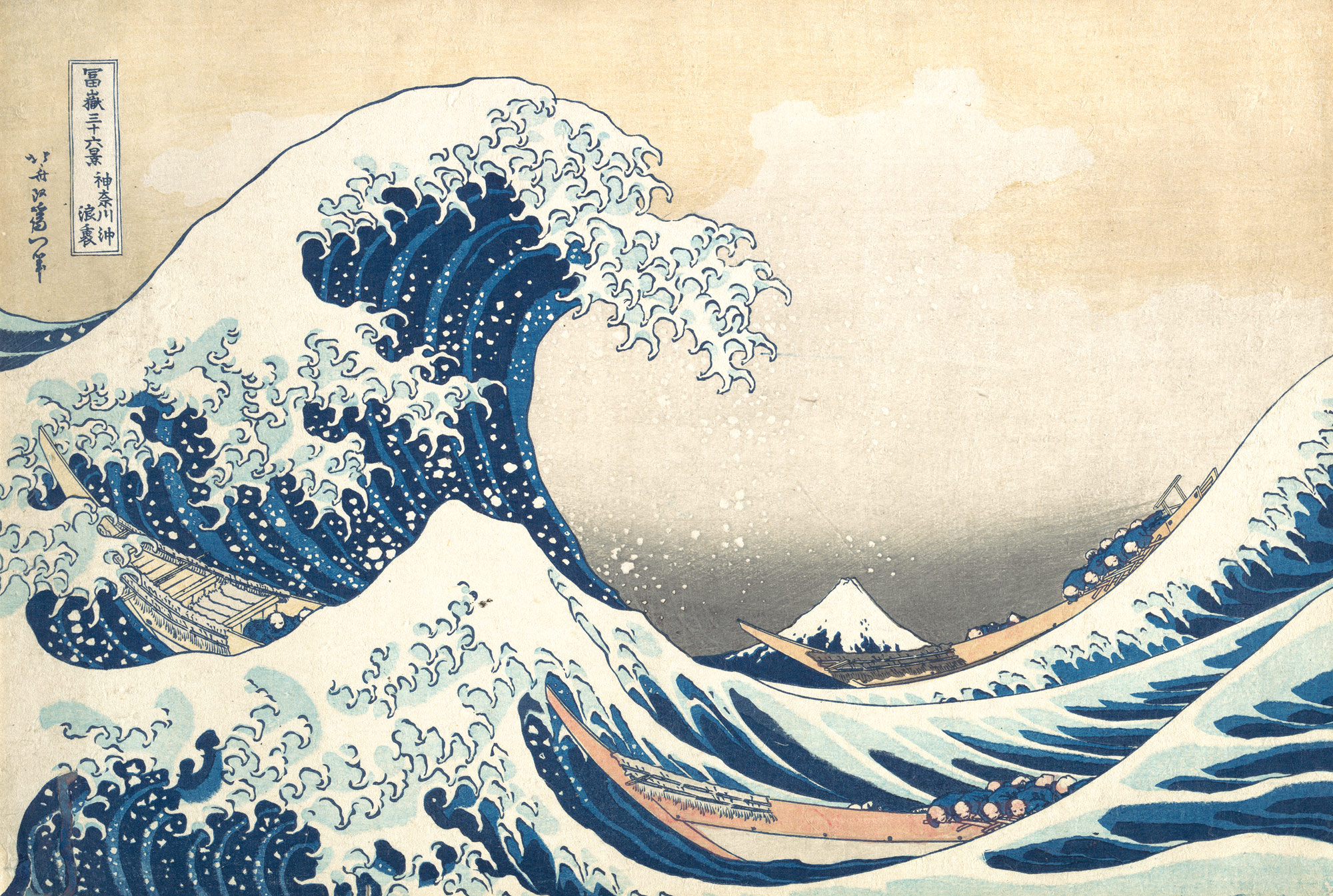
Linguistically, this shift in my thought makes a lot of sense: peoples create metaphor, and even language, based on their surroundings. As an extreme example of this, linguists have noted that most pre-industrial societies did not have a word for or conception of blue; instead, it was lumped in with green, or categorized in different ways entirely. (Cf, http://www.businessinsider.com/what-is-blue-and-how-do-we-see-color-2015-2 and other such reports.) I bring this up as an issue, not because blue is hard to see in every-day life, but to show that a natural concept can seem self-evident, but may not be tangible for a long time. Notably, the Egyptians were one of the only early societies to label blue, and they were the only ones to produce blue dye. Similarly, it is easy to go through the world knowing what waves are, even having seen waves, but unable to really integrate the concept psychologically until in finding a space where they are front-and-center.
This realization is particularly great in aikido, where we seek very subtle physical feelings that may be hard to verbalize. However, I think it is also useful to keep in mind for the every-day. I personally need a change of space fairly frequently to stay fresh in my academic work. Sometimes, this is very literal: working from home instead of the office, working at a coffeeshop instead of at home, working outside, etc. Not everyone has that flexibility however. The other side, I think, is mental space. For me, this means talking to diverse people with different perspectives. For example, I got some of my most vibrant ideas recently from a conversation with a physicist about his ideas of mapping love mathematically. This is a bit extreme, but more mundanely, almost everyone I know complains about how all of their work friends only talk about work. My circle of friends can't be the only ones who think this when they get home! Perhaps by bringing other ideas - news stories, good books, cool scientific discoveries - into conversation, we can all get new perspectives, and find a new vocabulary for dealing with everyday tasks.
It is important to stay fresh, and to seek out different ways of looking at the world. This exposure to difference (physical, mental, emotional, spiritual, whatever...) can only enlarge perspective and understanding. Not every expansion will be useful to every person, but you can only find what does help through the exposure to as much as possible.
But of course, when you're being exposed to the California sun, remember your sunscreen! ;-)
Monday, June 22, 2015
Relax... Progressively
"Relax Progressively" is one of Kokikai's central principles, hung on the wall in the dojo, something to strive for in every technique. This is certainly a challenge, as at every level, there is a necessary balance between the focus needed for a good technique, and the need to make that technique become a subconscious and calm motion. Coincidentally, while I was thinking about writing this post, my sensei Judy Warner posted these insights about how this conundrum works in the dojo: http://www.aikidorochester.com/2015/06/insights-from-past.html.
For me, the need for progressive relaxation was illustrated in spades in my life, on my honeymoon. After our NY wedding, my husband and I had a week of light travel in the Santa Fe region planned, before a second party with his family in Albuquerque. Now, you may have guessed by now - I am rather type A. This means that when I travel, I generally go to SEE things. Beach vacations always vaguely confused me, because obviously you're missing museums and local culture and snorkeling trips and hikes and... by sitting on a blanket reading all day. Why not just stay on your porch? So, naturally, I had a whole passel of sites picked out for our trip, dutifully researched and meticulously picked out.
One of the first days out there, we had made a quick excursion somewhere in the morning (maybe that was the day we went to a park owned by the Audubon society?), and were then contemplating what to do after lunch. I had my list of museums and parks at the ready, even though we were both still jetlagged, tired from wedding events, and rather sluggish and reeling from the sudden 7,000 feet of altitude. My husband, better at the whole relaxing thing than me, suggested we just wander around town a bit. At first, I was hesitant: yes, the little shops are fun to poke in, but we've had day trips before, and how many times can you go look in the same tourist traps? In the end though, we had an awesome afternoon just strolling and enjoying each other's company, without the pressure of getting to sites or seeing anything in its entirety.
I had a sudden realization: as much as I love vacations designed to help me see the world, which I will certainly still pack to the gills with activities and experiences I want to get to, there's also a lot of space for relaxation vacations. If the point is to be with the person you're on vacation with, holding hands through the town square is just as good as (and maybe better than!) holding hands on a grueling afternoon hike. As the vacation went on, I think I was able to make my relaxation progressively more complete, as we mixed activities and simply enjoying each others' company. By the time we hit the hot springs later in the week, I was definitely ready to just lay around in the sun all day!
Now that "real life" is coming back again, I'm hoping to reclaim that sense of progressive relaxation. Will this high strung New Yorker have a state of perfect calm through another move, buying a car, meeting a whole new community of people, prepping for a public lecture closely followed by my shodan test, and oh, yeah, getting back to my dissertation? You can bet not. But, I will try to make steps in that direction each day through things like taking time out to relax with my new husband(!), working on breathing, and making sure I keep myself grounded as much as possible.
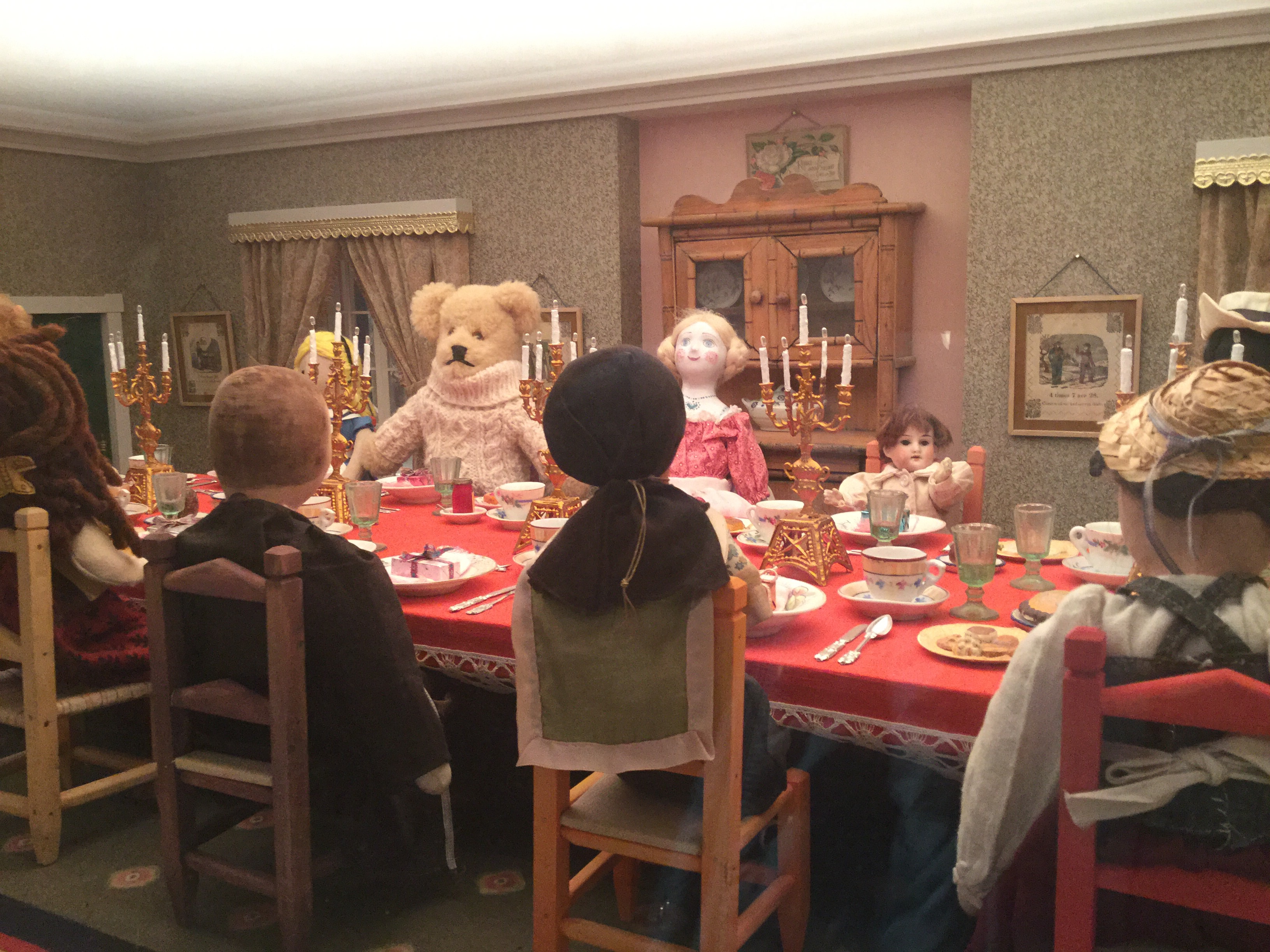
NB: Word to the wise: "international folk art" does not mean native craftworks akin to the culture exhibits in NYC's Museum of Natural History. Instead, it means many, many, weird dolls from the 1960s, as in the photo attached to this post (not my own).
NB 2: Another word to the wise:
instead of going to the Folk Art Museum when in Santa Fe, go to Kakawa Chocolate Shop, one of my favorite places in the world!
For me, the need for progressive relaxation was illustrated in spades in my life, on my honeymoon. After our NY wedding, my husband and I had a week of light travel in the Santa Fe region planned, before a second party with his family in Albuquerque. Now, you may have guessed by now - I am rather type A. This means that when I travel, I generally go to SEE things. Beach vacations always vaguely confused me, because obviously you're missing museums and local culture and snorkeling trips and hikes and... by sitting on a blanket reading all day. Why not just stay on your porch? So, naturally, I had a whole passel of sites picked out for our trip, dutifully researched and meticulously picked out.
One of the first days out there, we had made a quick excursion somewhere in the morning (maybe that was the day we went to a park owned by the Audubon society?), and were then contemplating what to do after lunch. I had my list of museums and parks at the ready, even though we were both still jetlagged, tired from wedding events, and rather sluggish and reeling from the sudden 7,000 feet of altitude. My husband, better at the whole relaxing thing than me, suggested we just wander around town a bit. At first, I was hesitant: yes, the little shops are fun to poke in, but we've had day trips before, and how many times can you go look in the same tourist traps? In the end though, we had an awesome afternoon just strolling and enjoying each other's company, without the pressure of getting to sites or seeing anything in its entirety.
I had a sudden realization: as much as I love vacations designed to help me see the world, which I will certainly still pack to the gills with activities and experiences I want to get to, there's also a lot of space for relaxation vacations. If the point is to be with the person you're on vacation with, holding hands through the town square is just as good as (and maybe better than!) holding hands on a grueling afternoon hike. As the vacation went on, I think I was able to make my relaxation progressively more complete, as we mixed activities and simply enjoying each others' company. By the time we hit the hot springs later in the week, I was definitely ready to just lay around in the sun all day!
Now that "real life" is coming back again, I'm hoping to reclaim that sense of progressive relaxation. Will this high strung New Yorker have a state of perfect calm through another move, buying a car, meeting a whole new community of people, prepping for a public lecture closely followed by my shodan test, and oh, yeah, getting back to my dissertation? You can bet not. But, I will try to make steps in that direction each day through things like taking time out to relax with my new husband(!), working on breathing, and making sure I keep myself grounded as much as possible.
NB: Word to the wise: "international folk art" does not mean native craftworks akin to the culture exhibits in NYC's Museum of Natural History. Instead, it means many, many, weird dolls from the 1960s, as in the photo attached to this post (not my own).
NB 2: Another word to the wise:
instead of going to the Folk Art Museum when in Santa Fe, go to Kakawa Chocolate Shop, one of my favorite places in the world!
Monday, May 18, 2015
Keep Them Coming Back
Well, it has been a while. Sadly, my blog schedule likely won't be back to once-per-week until mid-way through the summer, but I'll try to update at least a few times before then!
Today's thoughts stem from a conversation I had with a stranger last week, which made me extremely sad. I was at the YMCA in my hometown, getting in a pre-wedding workout. I had worn my Kokikai t-shirt, and after the weights class I took, a woman near me asked if I did aikido in the area. After I told her I wasn't in a school in my hometown, she told me the following story: She, a maybe-60 or so year old woman who had done a great job in an intense weights class, had taken aikido there a while back. She made it through a few belt ranks, but ended up quitting. This happened because the instructor, who thought rather highly of himself, was showing off for visitors one day and threw her so hard that she was seriously injured. She didn't go back after the injury, and several years later broke her wrist in a fall. X-rays showed that her wrist had healed hairline fractures, which she realized could only have come from that ill-fated aikido class.
I was horrified! Everything in her description sounded like the evil dojo in Karate Kid to me, not the aikido I know! In the Kokikai dojo, we always joke with the white belts that we throw them really lightly because we want them to "keep coming back." Even at higher ranks, we're a close-knit community, and everyone knows who shouldn't be thrown too hard, no matter how quickly they attack. And all of that is on nage's (the thrower's) side, paralleling the assumed situation of the woman who got thrown to injury by a black belt. On uke's side, we train very early that you must attack at a speed you feel comfortable recovering from, because safety always comes first.
So, my horrified rant aside, this is not actually trying to bash whatever branch is practiced in my hometown and laud my background of both Kokikai and Seidokan, which specifically are constructed against such injuries. Instead, I want to expand this idea into a life scenario. To me, the key here is that everyone must be treated as an individual, who intent, strengths, and weaknesses must be judged quickly and accurately.
In my own job as a writing instructor, I would need to make these judgments in the way I constructed written feedback, and when dealing with students in office hours. Is this someone I can really nit-pick and push, or will they take that as shattering criticism? Can I joke around a little, or do I need to keep it serious? Are they coming into my office on the verge of tears so I should be more gentle? To me, these questions parallel those in the dojo of, Do they already know how to roll safely? Are they a bit under the weather today? Do they still have a "bad side" for rolling which I have to watch out for? Both of these scenarios involve compassion for the person you are dealing with, observations about their current physical or mental state, and at least some exercise of emotional intelligence. Not getting physical injury keeps people coming back to a dojo, not feeling attacked by a teacher keeps students engaged in the class and more willing to come to office hours. The same certainly applies in other business scenarios: different clients are certainly treated with different mannerisms.
I think it is important to try to keep consciousness on who we are dealing with and what particular needs those people may have. This leads to more fruitful interaction all around, because when given the benefit of the doubt, or extra encouragement, or the firm command that is needed, the person addressed is more likely to respond positively, and keep coming back. Aikido teaches non-violence and loving-kindness, and I see no excuse for practicing the opposite either in the dojo our out through negligence, carelessness, or actual malice.
Today's thoughts stem from a conversation I had with a stranger last week, which made me extremely sad. I was at the YMCA in my hometown, getting in a pre-wedding workout. I had worn my Kokikai t-shirt, and after the weights class I took, a woman near me asked if I did aikido in the area. After I told her I wasn't in a school in my hometown, she told me the following story: She, a maybe-60 or so year old woman who had done a great job in an intense weights class, had taken aikido there a while back. She made it through a few belt ranks, but ended up quitting. This happened because the instructor, who thought rather highly of himself, was showing off for visitors one day and threw her so hard that she was seriously injured. She didn't go back after the injury, and several years later broke her wrist in a fall. X-rays showed that her wrist had healed hairline fractures, which she realized could only have come from that ill-fated aikido class.
I was horrified! Everything in her description sounded like the evil dojo in Karate Kid to me, not the aikido I know! In the Kokikai dojo, we always joke with the white belts that we throw them really lightly because we want them to "keep coming back." Even at higher ranks, we're a close-knit community, and everyone knows who shouldn't be thrown too hard, no matter how quickly they attack. And all of that is on nage's (the thrower's) side, paralleling the assumed situation of the woman who got thrown to injury by a black belt. On uke's side, we train very early that you must attack at a speed you feel comfortable recovering from, because safety always comes first.
So, my horrified rant aside, this is not actually trying to bash whatever branch is practiced in my hometown and laud my background of both Kokikai and Seidokan, which specifically are constructed against such injuries. Instead, I want to expand this idea into a life scenario. To me, the key here is that everyone must be treated as an individual, who intent, strengths, and weaknesses must be judged quickly and accurately.
In my own job as a writing instructor, I would need to make these judgments in the way I constructed written feedback, and when dealing with students in office hours. Is this someone I can really nit-pick and push, or will they take that as shattering criticism? Can I joke around a little, or do I need to keep it serious? Are they coming into my office on the verge of tears so I should be more gentle? To me, these questions parallel those in the dojo of, Do they already know how to roll safely? Are they a bit under the weather today? Do they still have a "bad side" for rolling which I have to watch out for? Both of these scenarios involve compassion for the person you are dealing with, observations about their current physical or mental state, and at least some exercise of emotional intelligence. Not getting physical injury keeps people coming back to a dojo, not feeling attacked by a teacher keeps students engaged in the class and more willing to come to office hours. The same certainly applies in other business scenarios: different clients are certainly treated with different mannerisms.
I think it is important to try to keep consciousness on who we are dealing with and what particular needs those people may have. This leads to more fruitful interaction all around, because when given the benefit of the doubt, or extra encouragement, or the firm command that is needed, the person addressed is more likely to respond positively, and keep coming back. Aikido teaches non-violence and loving-kindness, and I see no excuse for practicing the opposite either in the dojo our out through negligence, carelessness, or actual malice.
Thursday, April 23, 2015
Openness
Wow, it has been a while! Life has been a bit crazy, which leads me to the post I've been thinking about for a while, and am finally writing down.
Part of the many reasons I haven't been around much was that last weekend, I took a barely-planned trip across the country. Whether you actually know me, or you've just figured that I'm a type-A slightly neurotic academic based on this blog, you can probably guess that a cross-country flight on a week's notice is not my usual modus operandi. Perhaps it should be, though.
When I found out about a Shakespeare symposium that would allow me to see my (long-distance) fiance and future area of residence, I suddenly had a divided mind. Part of me said, "Oh my god! A valid professional excuse to go do all this stuff I want to do! Yes!" The other part of me said, "Oh my god. I have to pack for my move in a few weeks, I have to see all my friends here before that happens, I'm already behind where I wanted to be in my dissertation for the semester: I can't go." Yeah, because 3-4 extra days of work would definitely get me through dozens of books of reading for the next chapter that didn't happen. Obviously, I ended up going.
Why I bring this series of events up here is because it was yet another stark reminder of why I need to become better at embracing mu shin, that state of an aware, yet empty mind. In a rondori circle at the dojo, when I don't know the attack that's coming, I've gotten decent at not over-analyzing. In the rest of my life, not so much.
Embracing mu shin in life allows for greater flexibility. While one still can plan ahead, it means that opportunities that arise suddenly don't become these fraught moral dilemmas, plagued by the constant voice of, "But I had planned to..." In the dojo, we need mu shin in order to deal fluidly with whatever our partner throws at us - whether that is an unexpected type of attack, a poor or inexperienced style, or a harder throw that needs a bit more adept ukemi than we'd anticipated. In life, it means having the flexibility to seize opportunities when they arise, and not get thrown off-balance (off-center) when negative surprises happen. Little by little, I try to gain victory over myself, and banish the unhelpful aspects of my schedule-bound rigidity.
Part of the many reasons I haven't been around much was that last weekend, I took a barely-planned trip across the country. Whether you actually know me, or you've just figured that I'm a type-A slightly neurotic academic based on this blog, you can probably guess that a cross-country flight on a week's notice is not my usual modus operandi. Perhaps it should be, though.
When I found out about a Shakespeare symposium that would allow me to see my (long-distance) fiance and future area of residence, I suddenly had a divided mind. Part of me said, "Oh my god! A valid professional excuse to go do all this stuff I want to do! Yes!" The other part of me said, "Oh my god. I have to pack for my move in a few weeks, I have to see all my friends here before that happens, I'm already behind where I wanted to be in my dissertation for the semester: I can't go." Yeah, because 3-4 extra days of work would definitely get me through dozens of books of reading for the next chapter that didn't happen. Obviously, I ended up going.
Why I bring this series of events up here is because it was yet another stark reminder of why I need to become better at embracing mu shin, that state of an aware, yet empty mind. In a rondori circle at the dojo, when I don't know the attack that's coming, I've gotten decent at not over-analyzing. In the rest of my life, not so much.
Embracing mu shin in life allows for greater flexibility. While one still can plan ahead, it means that opportunities that arise suddenly don't become these fraught moral dilemmas, plagued by the constant voice of, "But I had planned to..." In the dojo, we need mu shin in order to deal fluidly with whatever our partner throws at us - whether that is an unexpected type of attack, a poor or inexperienced style, or a harder throw that needs a bit more adept ukemi than we'd anticipated. In life, it means having the flexibility to seize opportunities when they arise, and not get thrown off-balance (off-center) when negative surprises happen. Little by little, I try to gain victory over myself, and banish the unhelpful aspects of my schedule-bound rigidity.
Sunday, March 22, 2015
Consciousness Checks
After my Kokikai Winter Camp and Spring Break induced hiatus, I had assumed that my first blog post back would be about something I learned from Maruyama-Sensei at camp. But then life happened.
I had recently done a "Midterm Evaluation" with my class - where they evaluate my teaching at the halfway point, while there's still time to change things. I was reading these evals when I got back, and one of the questions I asked was "What is the most important thing you've learned in this class so far?" One of the answers struck me entirely:
"Writing with consciousness," the student said. "Writing with consciousness." Most likely, the student did not mean this on any deep philosophical level. Perhaps he or she simply meant paying attention to word choice, or not spouting the b.s. that many high school classes breed in bright kids, or not writing in a coffee-induced haze at 4AM. But for me, it raised a bizarre paradox: how can one write unconsciously, or subconsciously? Writing is innately a deeply conscious act, requiring both mental processing and physical reaction parts of the brain to be fired up, at the most literal level. On the flip side of that, I know that my best writing takes place from a state of mu shin, the hyper-aware empty mind that we strive for in aikido.
In general, however, I was struck by what this student said because it implied a greater truth about so many peoples' lives. If this student and many others were used to doing some portion of their homework without consciousness, how much work do I do in the same state? How much do you? How much of each of our lives is spent without consciousness? What part of each of our days do we go through in a state of inattentiveness, whether that means not concentrating on the task at hand, not caring, or just being in a mental daze?
In aikido, as all martial arts (as far as I know, along with most other physical disciplines), we train to heighten awareness at all times. Too often, though, I suspect that this state does not leave the dojo. In the coming week, I challenge myself and all of you to try to notice when we're slipping into unconscious action, and bring focus back to the task on hand. Many people do "posture checks" of some sort throughout the day, so why not consciousness checks?
I had recently done a "Midterm Evaluation" with my class - where they evaluate my teaching at the halfway point, while there's still time to change things. I was reading these evals when I got back, and one of the questions I asked was "What is the most important thing you've learned in this class so far?" One of the answers struck me entirely:
"Writing with consciousness," the student said. "Writing with consciousness." Most likely, the student did not mean this on any deep philosophical level. Perhaps he or she simply meant paying attention to word choice, or not spouting the b.s. that many high school classes breed in bright kids, or not writing in a coffee-induced haze at 4AM. But for me, it raised a bizarre paradox: how can one write unconsciously, or subconsciously? Writing is innately a deeply conscious act, requiring both mental processing and physical reaction parts of the brain to be fired up, at the most literal level. On the flip side of that, I know that my best writing takes place from a state of mu shin, the hyper-aware empty mind that we strive for in aikido.
In general, however, I was struck by what this student said because it implied a greater truth about so many peoples' lives. If this student and many others were used to doing some portion of their homework without consciousness, how much work do I do in the same state? How much do you? How much of each of our lives is spent without consciousness? What part of each of our days do we go through in a state of inattentiveness, whether that means not concentrating on the task at hand, not caring, or just being in a mental daze?
In aikido, as all martial arts (as far as I know, along with most other physical disciplines), we train to heighten awareness at all times. Too often, though, I suspect that this state does not leave the dojo. In the coming week, I challenge myself and all of you to try to notice when we're slipping into unconscious action, and bring focus back to the task on hand. Many people do "posture checks" of some sort throughout the day, so why not consciousness checks?
Sunday, March 1, 2015
Unbendable, not Rigid
Today, I found myself (yet again) mentioning to a friend that one of the biggest challenges of planning a wedding is trying to accommodate all of the different tastes and personalities involved in the event. She suggested to me that ultimately, it is only my own opinion and that of the groom - if we're happy, we'll forget anyone else's reactions down the line. I do agree with her, but I think most importantly, I need to remember my aikido training of "unbendable arm."
This is the feeling we seek in every technique, for the whole body: the sense that the arm goes where we want it to, on its own inevitable course, with no force necessary to make that so. I feel as though part of this is not just learning the feeling of "controlled relaxation" that is needed in a specific ki test. Instead, in practice, your unbendable arm needs to know when to move and shift. This depends on the situation, the technique, and the uke. While your arm will always have that "unbendable" feeling, it will be physically bent (in the manner of your choosing) to varying degrees between techniques, and over the course of one. To me, one main goal of aikido is learning to immediately shift technique as needed depending on the uke - how their body feels at every moment of the throw. A master practitioner will throw every uke perfectly, but that "perfect throw" will look very different when performed on 5'0" me, vs. a 6'5" man!
From this, I think there is an important life lesson - not only is "unbendable arm" important, but "unbendable mind." As with the body's feeling, this does not mean a rigid mind, or one unable to adapt to change or situation. Instead, it means a relaxed mind that can take any stimuli and redirect them in useful ways. So, for wedding planning, how can I redirect my and my fiance's love of metal into something that can remain faithful to our interest, but not horrify our older guests? This sense of fidelity to your ideas and yourself while making space for others around you, is something I think is crucial to all interpersonal relationships. I think it is an idea that can help in the workplace when dealing with differently-minded or even hostile coworkers (or superiors). It can help when in a social situation you're not entirely comfortable with, or when trying to plan any major event.
Fidelity to yourself and your own needs and preferences is important, as is respect for other's needs and preferences. I see a lot of people fall into grief because too much emphasis on the former turns into selfishness, and on the latter results in being a doormat. So once again, I think aikido's answer of the middle path is a good one, and I would suggest that this middle path results in a feeling of "unbendable mind."
This is the feeling we seek in every technique, for the whole body: the sense that the arm goes where we want it to, on its own inevitable course, with no force necessary to make that so. I feel as though part of this is not just learning the feeling of "controlled relaxation" that is needed in a specific ki test. Instead, in practice, your unbendable arm needs to know when to move and shift. This depends on the situation, the technique, and the uke. While your arm will always have that "unbendable" feeling, it will be physically bent (in the manner of your choosing) to varying degrees between techniques, and over the course of one. To me, one main goal of aikido is learning to immediately shift technique as needed depending on the uke - how their body feels at every moment of the throw. A master practitioner will throw every uke perfectly, but that "perfect throw" will look very different when performed on 5'0" me, vs. a 6'5" man!
From this, I think there is an important life lesson - not only is "unbendable arm" important, but "unbendable mind." As with the body's feeling, this does not mean a rigid mind, or one unable to adapt to change or situation. Instead, it means a relaxed mind that can take any stimuli and redirect them in useful ways. So, for wedding planning, how can I redirect my and my fiance's love of metal into something that can remain faithful to our interest, but not horrify our older guests? This sense of fidelity to your ideas and yourself while making space for others around you, is something I think is crucial to all interpersonal relationships. I think it is an idea that can help in the workplace when dealing with differently-minded or even hostile coworkers (or superiors). It can help when in a social situation you're not entirely comfortable with, or when trying to plan any major event.
Fidelity to yourself and your own needs and preferences is important, as is respect for other's needs and preferences. I see a lot of people fall into grief because too much emphasis on the former turns into selfishness, and on the latter results in being a doormat. So once again, I think aikido's answer of the middle path is a good one, and I would suggest that this middle path results in a feeling of "unbendable mind."
Tuesday, February 17, 2015
Aikido: Love for the World

In Ueshiba Kisshomaru's book, The Spirit of Aikido, he quotes O'Sensei on the nature of aikido's goals:
By virtue of the subtle working of ki we harmonize mind and
body and the relationship between the individual and the
universe. When the subtle working of ki is unhealthy, the world
falls into confusion and the universe into chaos. The harmonizing
of a united ki-mind-body with the activity of the universe
is critical for order and peace in the world. (24)
To today's reader, this type of spirituality sometimes rings hollow. However, I think there's a lot to be gained from O'Sensei's words even on a more metaphorical level. Such a perspective of righting the world is familiar to me as well from my own Jewish upbringing. In my culture, we called this notion, tikkun olam, "repairing the world," an idea which grew during the mystically-oriented early Middle Ages. This is often taken to mean that every individual has a responsibility to contribute what she can to making the world a better and more fully-realized place, and in doing so, she will also fulfill herself. To me, this is exactly the sort of harmonizing of which O'Sensei spoke.
Implicit in both of these mystic traditions is love: a respect and love for the world around us, a feeling that is all too often absent. Jews recently celebrated Tu B'Shevat, the holiday honoring trees. This holiday always serves as a re-centering point for me (even when I have little to no observance!); a reminder that the world is something which needs active care. So many traditions and faiths look to the earth as nurturer, yet the modern world is so distant from it.
So, how to harmonize with the universe, to heal the world? To me, there are many ways of doing this, and not all of them involve having a plot of land on which to plant, or enough money to make donations to World Wildlife Fund or Wildlife Conservation Society. Instead, I believe O'Sensei's words can provide guidance. As he suggests, the first step to healing the universe is to heal the self. We must strive to integrate mind, body, and ki (whatever that term means to you). By centering and unifying the self, we can then face the world with calmness and love. When the "activity of the universe" seems against us, the centered being can face it without expelling hatred, fury, despair, or any of the other negative emotions which are so contagious to those around us.
Essentially, I see Ueshiba-Sensei's message as a cue to project love and caring in every situation. Whether we face a friend, a lover, a colleague, an antagonist, or the workings of the world itself, we must train to face all of them with an acceptance of what is (as opposed to the fictions we wish), and with that acceptance, bring positive mind to others.
Picture taken from: http://www.huntington.org/uploadedImages/Files/images/JG_overview_1167x551.jpg
Picture taken from: http://www.huntington.org/uploadedImages/Files/images/JG_overview_1167x551.jpg
Sunday, February 8, 2015
Here, Now
This week had a bunch of frustrations for me, and a bunch of great things. Because of all of these things happening, though, concentration... didn't always happen. I'm sure we've all been there - focusing on a task, and then suddenly, "If I had just... yesterday/last month/6 years ago, things would be different," or, "Tomorrow/next week/in 3 months I really need to ...". Maybe this helps a bit in planning, but is not a terribly effective way to get things done.
For this reason, it hit me like a ton of bricks when during warm-ups Thursday night, my sensei suddenly said, "This is mostly for me, as well as you: Be here, now." As soon as she said it, I realized that I had been a million miles away and phoning in my warm ups. Of course, this is problematic because warm-ups don't just "warm up" your body - the ki exercises we do at that point in the class strengthen focus and the feeling of power that should inflect every technique, and they set each person up to do their best aikido that evening. They are a centering technique, not just a way to limber up the muscles.
One of the great things about warm-ups, though, is that they do act towards centering. We come into the dojo with scattered thoughts, and the formulaic warm-ups chase those thoughts out until we can exist in the present. For me, they are one of the first steps towards mu shin - the feeling of alert "no mind" that I've talked about before. They are indeed a reminder to "Be here, now."
This is a feeling that I think is vitally important to take out of the dojo and into the world. Even if I can't face every task with a feeling of true centered mu shin, a smaller goal is to get more moments of "Here, now". Rather than let my thoughts run rampant (and inevitably towards past and future) while I try to cope with work tasks, social functions, etc, I need to be focused on the task at hand. The benefit to this approach is better concentration, leading to both faster and more precise work. Then, I can worry about the future.
Of course, along with productivity, this style of focus also can open our eyes to the great things happening now!
For this reason, it hit me like a ton of bricks when during warm-ups Thursday night, my sensei suddenly said, "This is mostly for me, as well as you: Be here, now." As soon as she said it, I realized that I had been a million miles away and phoning in my warm ups. Of course, this is problematic because warm-ups don't just "warm up" your body - the ki exercises we do at that point in the class strengthen focus and the feeling of power that should inflect every technique, and they set each person up to do their best aikido that evening. They are a centering technique, not just a way to limber up the muscles.
One of the great things about warm-ups, though, is that they do act towards centering. We come into the dojo with scattered thoughts, and the formulaic warm-ups chase those thoughts out until we can exist in the present. For me, they are one of the first steps towards mu shin - the feeling of alert "no mind" that I've talked about before. They are indeed a reminder to "Be here, now."
This is a feeling that I think is vitally important to take out of the dojo and into the world. Even if I can't face every task with a feeling of true centered mu shin, a smaller goal is to get more moments of "Here, now". Rather than let my thoughts run rampant (and inevitably towards past and future) while I try to cope with work tasks, social functions, etc, I need to be focused on the task at hand. The benefit to this approach is better concentration, leading to both faster and more precise work. Then, I can worry about the future.
Of course, along with productivity, this style of focus also can open our eyes to the great things happening now!
Saturday, January 31, 2015
True Victory is... Sometimes Compromise
Last week, I wrote about the principle, masakatsu agatsu, true victory is victory over oneself. This week, I was reminded that sometimes, that means compromise.
While I generally get a lot out of the idea of masakatsu agatsu, I also think that the idea of victory itself creates a false dichotomy - where there is a victor, there is also a loser. However, we do not fight our partners in the dojo, so why do we fight ourselves? Of course, we challenge ourselves as we do our partners, but I think it is also important to remember that thinking of ourselves as the adversary is highly counterproductive.
This week, continued grad school frustration plus a traumatic, though helpful, visit to a career counselor spawned yet another breakdown about my future. I'm sure all of my grad school friends (and most other people in my age bracket!) can attest that this is something that just has to happen at least every couple of months. Unfortunately, this breakdown took the form of a three hour+ on-and-off crying jag, which led to a multi-day headache, and triggered my normally-cyclic depression to appear outside of its usual pattern and stay the week. Obviously, this did not lead to much productivity. Professionally, I noodled around with things all week, and often found myself caught by inertia and staring blankly at my computer. Headache and exhaustion led me to cut out of aikido a bit early on Tuesday, and not go Wednesday at all.
What was my automatic response? Masakatsu agatsu! I need to overcome myself! I need to force myself to go get things done and magically find energy for everything!
NO. This is not helpful. Anyone with a chronic disease can tell you, whether they suffer from depression, Lyme, arthritis, IBS, or even old age, there are days when you just can not do anything, and blaming yourself leads to only one result: feeling even worse about your inability.
This leads me to posit that masakatsu agatsu is truly asking instead that aikidoka seek to be their best selves, within every situation. I already discussed last week that this principle's orientation towards the self allows people of different abilities to all participate successfully through self-challenge. I would go further today and suggest that it allows every person to try to better themselves, within their current parameters. Rather than trying to force myself to do everything and only finding guilt, I needed to set realistic goals. Ok, maybe my morning exercise routine fell by the wayside, but at least I got to Test Prep Thursday night. I didn't get as much academic reading done as I wanted to, but I ran a good class when I had to teach, and I did get through a couple of useful texts.
In the dojo, this also holds true. Generally I'm flexible, but some days, my muscles are just tight. I don't expect myself to reach quite as far on those days - I just do my best to stretch with what my body gives me, and assume that I'll be back to normal soon if I keep doing my thing. This is accepted by most people who exercise, so why is it different outside of the gym? So, you forgot some techniques today. Just apply those you remember as perfectly as you can. So, your IBS is acting up - just stick to gentle foods, and try not to let it hurt your social life too much. So, your arthritis is worse today: allow yourself to do laundry (and therefore pick up heavy wet towels) a different day, and just do some computer work today.
Sometimes, victory over oneself means accepting terms of surrender, of blending with your internal and external situation. Mind over matter works... to a point, and forgiving yourself for that can often be the most productive means of moving forward. Moving forward is important, but sometimes you can leap, while other times you can only inch. Neither is a reason for self-recrimination. The principle of "victory" is a slippery one, and can mean something different to every person at every minute of the day. Forgive yourself when your parameters change. We're only human.
While I generally get a lot out of the idea of masakatsu agatsu, I also think that the idea of victory itself creates a false dichotomy - where there is a victor, there is also a loser. However, we do not fight our partners in the dojo, so why do we fight ourselves? Of course, we challenge ourselves as we do our partners, but I think it is also important to remember that thinking of ourselves as the adversary is highly counterproductive.
This week, continued grad school frustration plus a traumatic, though helpful, visit to a career counselor spawned yet another breakdown about my future. I'm sure all of my grad school friends (and most other people in my age bracket!) can attest that this is something that just has to happen at least every couple of months. Unfortunately, this breakdown took the form of a three hour+ on-and-off crying jag, which led to a multi-day headache, and triggered my normally-cyclic depression to appear outside of its usual pattern and stay the week. Obviously, this did not lead to much productivity. Professionally, I noodled around with things all week, and often found myself caught by inertia and staring blankly at my computer. Headache and exhaustion led me to cut out of aikido a bit early on Tuesday, and not go Wednesday at all.
What was my automatic response? Masakatsu agatsu! I need to overcome myself! I need to force myself to go get things done and magically find energy for everything!
NO. This is not helpful. Anyone with a chronic disease can tell you, whether they suffer from depression, Lyme, arthritis, IBS, or even old age, there are days when you just can not do anything, and blaming yourself leads to only one result: feeling even worse about your inability.
This leads me to posit that masakatsu agatsu is truly asking instead that aikidoka seek to be their best selves, within every situation. I already discussed last week that this principle's orientation towards the self allows people of different abilities to all participate successfully through self-challenge. I would go further today and suggest that it allows every person to try to better themselves, within their current parameters. Rather than trying to force myself to do everything and only finding guilt, I needed to set realistic goals. Ok, maybe my morning exercise routine fell by the wayside, but at least I got to Test Prep Thursday night. I didn't get as much academic reading done as I wanted to, but I ran a good class when I had to teach, and I did get through a couple of useful texts.
In the dojo, this also holds true. Generally I'm flexible, but some days, my muscles are just tight. I don't expect myself to reach quite as far on those days - I just do my best to stretch with what my body gives me, and assume that I'll be back to normal soon if I keep doing my thing. This is accepted by most people who exercise, so why is it different outside of the gym? So, you forgot some techniques today. Just apply those you remember as perfectly as you can. So, your IBS is acting up - just stick to gentle foods, and try not to let it hurt your social life too much. So, your arthritis is worse today: allow yourself to do laundry (and therefore pick up heavy wet towels) a different day, and just do some computer work today.
Sometimes, victory over oneself means accepting terms of surrender, of blending with your internal and external situation. Mind over matter works... to a point, and forgiving yourself for that can often be the most productive means of moving forward. Moving forward is important, but sometimes you can leap, while other times you can only inch. Neither is a reason for self-recrimination. The principle of "victory" is a slippery one, and can mean something different to every person at every minute of the day. Forgive yourself when your parameters change. We're only human.
Sunday, January 25, 2015
Masakatsu Agatsu: Birthday Meditations
One of the principles of aikido is, masakatsu agatsu, or "true victory is victory over oneself." In the dojo, this is often eminently visible. Two people will have the same rank, but to an outside observer, seem to have vastly different skill levels. To their constant classmates, though, it is obvious that both have their strengths and weaknesses, and both are proportionally better than the year prior, or when they started. One person may have had prior martial arts training which allowed them to start at a higher level, or maybe it meant they had more to unlearn at the beginning. However, aikido tracks our progress against ourselves, rather than our peers. If I have grown the proper amount in the last year, I'll be asked to test, whether I know fewer techniques than someone else testing for the same rank, or more of them.
This principle of masakatsu agatsu is one of the reasons I first became drawn to aikido. Often, it isn't useful in life to measure ourselves against others... or the pieces of others that they allow us to see. As a visitor to the dojo won't recognize the struggles each student overcame to reach their belt rank, I can't know what my peers did or didn't do to reach their place in life, what motivated them to post that happy selfie, how they feel when they get home at the end of the work day. All I can hope is that I did a better job at being me.
My birthday was this past week, and so these thoughts of self-comparison are at the fore of my brain. I wonder, did I work to my full capacity this past year? Was I as kind as I want to be? Did I manage to be a good friend to everyone? Did I cope with my problems adequately without forcing everyone around me to hear me griping all the time? I hope the answer is yes, though that last question probably still needs some work.
Masakatsu agatsu is likely not a one-time thing, however, and it need not be a lonely path. The self doesn't stay conquered! This week also began test prep at the dojo, which means we took a practice test and video taped it, to have as a baseline for our next 6 weeks of practice. At the end, everyone (from white belt to our highest black belts) critiques each test. The tester always looks at his or her own test first with a critical eye, and together, we work to build a picture of every aikidoka as someone with many strengths, who can work towards a few concrete goals before their test. This collaborative experience shows us that victory over ourselves, while important to have as a self-generated goal, is not necessarily a solipsistic one. We can rely on our friends, family, and mentors to help us along the way, giving honest and generous feedback. Sometimes, overcoming oneself is a very literal fight, not just being the best you can be. But overcoming that fear, that illness, that flaw, is both vitally important, and something we need a support system to do.
This principle of masakatsu agatsu is one of the reasons I first became drawn to aikido. Often, it isn't useful in life to measure ourselves against others... or the pieces of others that they allow us to see. As a visitor to the dojo won't recognize the struggles each student overcame to reach their belt rank, I can't know what my peers did or didn't do to reach their place in life, what motivated them to post that happy selfie, how they feel when they get home at the end of the work day. All I can hope is that I did a better job at being me.
My birthday was this past week, and so these thoughts of self-comparison are at the fore of my brain. I wonder, did I work to my full capacity this past year? Was I as kind as I want to be? Did I manage to be a good friend to everyone? Did I cope with my problems adequately without forcing everyone around me to hear me griping all the time? I hope the answer is yes, though that last question probably still needs some work.
Masakatsu agatsu is likely not a one-time thing, however, and it need not be a lonely path. The self doesn't stay conquered! This week also began test prep at the dojo, which means we took a practice test and video taped it, to have as a baseline for our next 6 weeks of practice. At the end, everyone (from white belt to our highest black belts) critiques each test. The tester always looks at his or her own test first with a critical eye, and together, we work to build a picture of every aikidoka as someone with many strengths, who can work towards a few concrete goals before their test. This collaborative experience shows us that victory over ourselves, while important to have as a self-generated goal, is not necessarily a solipsistic one. We can rely on our friends, family, and mentors to help us along the way, giving honest and generous feedback. Sometimes, overcoming oneself is a very literal fight, not just being the best you can be. But overcoming that fear, that illness, that flaw, is both vitally important, and something we need a support system to do.
Saturday, January 17, 2015
Breaking Down Duality
It is easy to see the world as a series of dualities. They appear all around us: male/female, day/night, etc. It is also easy to see the dojo this way: uke/nage, sensei/student, left/right. We are constantly told, "Remember to use both hands," and reminded of our lateral symmetry. We aim for the third leg to take uke off balance, because humans only actually have two to balance on.
However, when these dualities are examined more closely, they tend to break down. Looking outside at dawn or dusk reveals something neither day nor night. Biology and psychology both suggest that neither sex nor gender is always dualistic. The same holds true in the dojo. Uke and nage constantly switch roles, and both learn from the other. I'm lucky to be part of a huge dojo, so the black belt in the role of "sensei" one day may well be simply another student the next day. While we have two hands and two feet, our symmetry is united by a constant awareness of one point at the center.
Because aikido is an art of self-improvement, we do not have competitions or enemies. This allows us to have an open-minded perspective on the world. We are encouraged to learn the mediated response - this too breaks dualism. We have the option of responding differently when we're grabbed by a friend in a bar, or a stranger in an alley. We can then also decide if that stranger is grabbing us because they're hurt and need attention, are drunk and belligerent, or are actually a danger and perhaps have a weapon. This means there is a lot more nuance than "friend" and "enemy".
There has been a lot of hatred in the media lately. There are reports of acts of hatred, from Boko Haram's unprecedented massacre, to the murders at Charlie Hebdo. There are also responses of hatred, with people blaming all Muslims, blaming all satirists, erasing all women from photos, and wanting to bomb X people out of existence. You'll note that my examples are drawn from both "sides" of these conflicts - it seems as though the one thing everyone agrees on is that WE are right, and THEY are wrong.
Wars are a lot easier to fight when the enemy is faceless and manic. In aikido, however, our goal is deescalation and peace. For this, we must do our best to see people as people, as individuals. If we considered every attacker as identical, we'd hurt beginners by throwing them like blackbelts. We'd pound friends' faces into the ground because muscle memory interprets a playful grab as a hostile act.
Instead, in aikido, we walk chudo - the middle path. This means we can look to both sides with awareness, both in the physical world and mentally. We learn to see the extremes of excess force and flight and decide what action between those extremes is merited. We see extremists, and avoid their polarized view of life. Something I feel like I can do in this world is to spread this perspective of observation and moderate response. It is hard to feel like I'm making a difference because the world is so big, but if I can remind those around me to react with consideration rather than hatred, that is something.
However, when these dualities are examined more closely, they tend to break down. Looking outside at dawn or dusk reveals something neither day nor night. Biology and psychology both suggest that neither sex nor gender is always dualistic. The same holds true in the dojo. Uke and nage constantly switch roles, and both learn from the other. I'm lucky to be part of a huge dojo, so the black belt in the role of "sensei" one day may well be simply another student the next day. While we have two hands and two feet, our symmetry is united by a constant awareness of one point at the center.
Because aikido is an art of self-improvement, we do not have competitions or enemies. This allows us to have an open-minded perspective on the world. We are encouraged to learn the mediated response - this too breaks dualism. We have the option of responding differently when we're grabbed by a friend in a bar, or a stranger in an alley. We can then also decide if that stranger is grabbing us because they're hurt and need attention, are drunk and belligerent, or are actually a danger and perhaps have a weapon. This means there is a lot more nuance than "friend" and "enemy".
There has been a lot of hatred in the media lately. There are reports of acts of hatred, from Boko Haram's unprecedented massacre, to the murders at Charlie Hebdo. There are also responses of hatred, with people blaming all Muslims, blaming all satirists, erasing all women from photos, and wanting to bomb X people out of existence. You'll note that my examples are drawn from both "sides" of these conflicts - it seems as though the one thing everyone agrees on is that WE are right, and THEY are wrong.
Wars are a lot easier to fight when the enemy is faceless and manic. In aikido, however, our goal is deescalation and peace. For this, we must do our best to see people as people, as individuals. If we considered every attacker as identical, we'd hurt beginners by throwing them like blackbelts. We'd pound friends' faces into the ground because muscle memory interprets a playful grab as a hostile act.
Instead, in aikido, we walk chudo - the middle path. This means we can look to both sides with awareness, both in the physical world and mentally. We learn to see the extremes of excess force and flight and decide what action between those extremes is merited. We see extremists, and avoid their polarized view of life. Something I feel like I can do in this world is to spread this perspective of observation and moderate response. It is hard to feel like I'm making a difference because the world is so big, but if I can remind those around me to react with consideration rather than hatred, that is something.
Subscribe to:
Posts (Atom)