Apparently I'm bad about updating out here in Cali... Well, here's to trying to be better about this!
Something I've been thinking about a lot recently is community - it is both hard to find and vital to make when moving to a new place. This awareness makes me even more grateful for aikido. In Rochester, the dojo was one of the strongest communities I found - my family away from home. Now that I switched coasts, I've been even more overwhelmed - the fledgling community here welcomed me with open arms, and I have been working hard to help them grow into something sustainable and full of vitality.
So, why does aikido allow for such a feeling of community? I think that one of our newest members hit the nail on the head when he mentioned why he was planning to stick with us. He said that it was obvious our practice was based in a pure love of the art, which made the practice atmosphere seem friendly and collaborative. This is exactly what we're going for - as I've discussed before, I see the theme of victory over oneself as central to aikido, which means that you are only competing against yourself. Other people in the dojo, whether more or less experienced, can only help with that goal.
In my view, this collaborative kind of atmosphere is vital for any sort of study. In my life as a grad student, I am at my most productive when talking with colleagues about a whole range of topics - to me, cutthroat competition only hinders effectiveness, whereas collaboration always allows for new perspectives and ideas to flourish. This approach also correlates with the aikido goal of a holistic approach to life, with no part neglected. By building a community, rather than a group of working enemies, mental health and growth is facilitated, along with work. This in turn leads to even more productivity!
To me, the dojo can be a template for other social interactions. In the dojo, uke and nage each try to improve their role, and constantly switch off, preventing any sense of a constant attacker. The less and more experienced people work together, and both have the mindset of learning from the other. Instructors look forward to taking classes with other sensei's, so that their own practice can continue to grow and they can develop new ways to present materials to their own students. To me, this maps well onto ideal work situations - in academia, professors can learn from their students' fresh perspectives, and can keep friendly conversations alive with colleagues in their own departments and out. This is certainly the type of atmosphere I'll work to cultivate in my life - both the dojo and my future classroom.
Thursday, October 22, 2015

Friday, October 2, 2015
Train to Not Use It
Almost every non-martial artist I mention aikido to asks one question: "Have you ever used it???" To me, there are two answers to this question. The answer I actually believe is yes: I use it every day, and strive to use it every waking second. If you're not sure what I mean by that, go read my prior posts to get some ideas. The answer to the question they really mean, though, is no: I have never used it in a physical conflict situation. And I hope I never have to.
This is the answer that nearly every martial artist I know gives; particularly that last part. Aikido strives for non-violence, but we all know that if we were attacked, the pavement around us would cause rather serious damage. Friends of mine who train in "harder" martial arts (force-wise, not skill-wise!) go even further - one person confessed to me that if she were ever actually attacked, she'd be afraid of killing her attacker, because the defenses that come most naturally to her are things like throat-jabs, which are effective, but very difficult to rein in!
This is why, across most martial arts, the phrase "We train so that we never use it," can be applied. We don't just learn to use our bodies as (offensive or defensive) weapons, but also the discipline not to physically start or verbally instigate a fight. In aikido at least, we learn to moderate our responses, so if someone attacks us, we can lay on a different level of hurt to a belligerent drunk than to an armed mugger. We may even learn to verbally diffuse conflicts before they escalate to a level of physical violence. By training, we learn to respect our bodies' potential to cause damage.
 If you haven't figured it out by now, this is my second ever politically-relevant blog post. Something that strikes me in all gun control debates is how little guns seem to be recognized as a legitimate martial pursuit, and on the flip side, needing the high degree of training that we all go through. Honestly, I'd love to be one of the people who says we should just ban guns entirely. Statistics in gun-free countries show that even among criminals, gun deaths become negligible. Indeed, a couple of years ago, there was a knife incident in a Chinese school the same day as as a shooting in an American school - embarrassingly, we've had so many that I can't even remember which it was! But, the point being, a dozen or so Americans were killed that day. As many Chinese were injured, but not one fatally. It's harder to kill as an amateur knife-wielder than as an imbecile with a semi-automatic. The harder it is for people to have personal access to said semi-automatics, the harder it is to kill people. Yes, I realize that it is still possible, but the syllogistic logic remains sound.
However, keeping me from that camp is my experience of those I'll call respectful gun owners. These are people who respect their weapons and what those weapons can do. They train guns the way I train aikido (ok, nearly all of them I can think of personally are/were also open-hand martial artists, but still...), and I have no hesitations about their trustworthiness when armed. One takes such a holistic approach that she even makes her own bullets. Because they get the same meditative joy out of their craft as I do out of mine, I have a hard time making a blanket statement that their passion is less valid than mine.
So, to wrap up my extremely ambivalent thoughts, some more ambivalence: yes, I do think guns kill people. They are devastating weapons, and even badly aimed can shatter bone, puncture organs, etc, to a much greater degree than other weapons poorly used. More guns, in my opinion, means more chances that the wrong person will get ahold of them, and have more chances to kill people (the Oregon shooter had a collection of THIRTEEN!). However, I also think that people kill people. Some large number of people seem to be brought up without any understanding that guns are mortal weapons, which allows them into the hands of both the untrained and unhinged (for the former, https://www.washingtonpost.com/local/crime/three-year-old-girl-dead-after-shooting-in-southeast-washington/2015/07/30/9ec511c6-36a1-11e5-b673-1df005a0fb28_story.html). As martial artists, we train for years in order to not use our skills. Perhaps more recreational gun users need to learn the same lesson.
NB: Before anyone starts commenting furiously, I was not trying to make any sort of policy suggestions here! I certainly have some amorphous thoughts on that, but my dominant point is simply that anything with lethal potential should be respected.
Tuesday, September 15, 2015
Looking Forward
I had an absurd experience at a coffeeshop last week, where a woman who had been sitting near me for 2 hours suddenly started spouting hate speech against Jews, apparently continuing a conversation she'd started with a third person while I was in the restroom. (Person 3 was leaving as I got back, so I had no context.) I engaged the woman, but was torn among 1) honestly trying to educate her, 2) not leaping across the couches with a very non-aikido response, and 3) just trying to disengage and go back to my reading (difficult because she kept talking to 'clarify' her point, or at least not sound like a complete a@#%$^!). All of this was overridden by the most forceful responses: a huge adrenaline rush, and the complete shock of a normal-looking woman with some hippie juice drink suddenly engaging me in hate against my own culture, and obviously expecting me to agree with her.
After all of this ended (with her suddenly packing up and leaving!), I found myself mentally unable to disengage. Over the next several hours, days, and even now, I've found myself replaying the scenario in my head. How many more productive things I could have said to make it a teaching moment! (How many more witty comebacks, though that is less productive...) Yes, I pointed out that the person she'd been peacefully working near all afternoon was in her demonized group, but other than probably making her feel like a jerk and hopefully spawning some self-study, I was not the best cultural ambassador. In my imagination, I've seen so many better scenarios where I engaged her in a Socratic dialogue and helped her to see the absurdity of her own prejudices and hatreds.
But this isn't productive.
Something I've tried to stress in my recent Aikido classes is not beating yourself up. Most students (myself included) find themselves at least once a class beating themselves up over a particular technique or throw. Teachers of any field have probably seen this happen: a sudden sign of disappointment like a head shake or "tsk" sound, mounting frustration, and then a complete inability to do better. That last part, at least in the dojo, is nearly always caused by that instant-repeat feature. The student gets so caught in what went wrong and how they could have done it better, they forget to focus on how to move forward, how they can do it better now.
It is a delicate balance, I think. Past mistakes must be learned from, and that often comes from analyzing reactions and considering how you can do better. But, when that reviewing gets in the way (whether of performing a technique again 30 seconds later, or of facing life with a quiet mind a day/week/month later), it becomes a liability.
Ironically, this happened to me the week before the Jewish High Holy Days began. Rosh Hashanah, which ended today, is the New Year, and Yom Kippur next week is the "Day of Repentance," when Jews evaluate their poor choices, cruel deeds, etc, and ask forgiveness. In the 10 days in between, human forgiveness for those things is supposed to be sought from peers before turning to a higher power for spiritual and unforgiven wrongs. To me, the holiday weeks highlight the importance of what I've been saying in this rather lengthy post. I always see the holiday season as helping with this type of purgation process. For me at least, it is always a time to forgive myself for things I've dwelt over for far too long. I tend to see myself as a "bad person" when I'm cranky at someone, or have a self-centered day. The days of repentance and self-searching help to remind me that I am just a ... person.
I think that is the idea I want to emphasize in this post. Whatever goes wrong, whether it is a poorly executed technique, or snapping at a loved one, or not handling a conflict with a stranger optimally, that is not a value judgment. In aikido, it means that we are all students, not that I am terrible at aikido or that you are hopelessly uncoordinated. In life, it means we are people - flawed people who have emotional human reactions, and can only hope that when facing that situation again, we act with more dignity and grace than before.

After all of this ended (with her suddenly packing up and leaving!), I found myself mentally unable to disengage. Over the next several hours, days, and even now, I've found myself replaying the scenario in my head. How many more productive things I could have said to make it a teaching moment! (How many more witty comebacks, though that is less productive...) Yes, I pointed out that the person she'd been peacefully working near all afternoon was in her demonized group, but other than probably making her feel like a jerk and hopefully spawning some self-study, I was not the best cultural ambassador. In my imagination, I've seen so many better scenarios where I engaged her in a Socratic dialogue and helped her to see the absurdity of her own prejudices and hatreds.
But this isn't productive.
Something I've tried to stress in my recent Aikido classes is not beating yourself up. Most students (myself included) find themselves at least once a class beating themselves up over a particular technique or throw. Teachers of any field have probably seen this happen: a sudden sign of disappointment like a head shake or "tsk" sound, mounting frustration, and then a complete inability to do better. That last part, at least in the dojo, is nearly always caused by that instant-repeat feature. The student gets so caught in what went wrong and how they could have done it better, they forget to focus on how to move forward, how they can do it better now.
It is a delicate balance, I think. Past mistakes must be learned from, and that often comes from analyzing reactions and considering how you can do better. But, when that reviewing gets in the way (whether of performing a technique again 30 seconds later, or of facing life with a quiet mind a day/week/month later), it becomes a liability.
Ironically, this happened to me the week before the Jewish High Holy Days began. Rosh Hashanah, which ended today, is the New Year, and Yom Kippur next week is the "Day of Repentance," when Jews evaluate their poor choices, cruel deeds, etc, and ask forgiveness. In the 10 days in between, human forgiveness for those things is supposed to be sought from peers before turning to a higher power for spiritual and unforgiven wrongs. To me, the holiday weeks highlight the importance of what I've been saying in this rather lengthy post. I always see the holiday season as helping with this type of purgation process. For me at least, it is always a time to forgive myself for things I've dwelt over for far too long. I tend to see myself as a "bad person" when I'm cranky at someone, or have a self-centered day. The days of repentance and self-searching help to remind me that I am just a ... person.
I think that is the idea I want to emphasize in this post. Whatever goes wrong, whether it is a poorly executed technique, or snapping at a loved one, or not handling a conflict with a stranger optimally, that is not a value judgment. In aikido, it means that we are all students, not that I am terrible at aikido or that you are hopelessly uncoordinated. In life, it means we are people - flawed people who have emotional human reactions, and can only hope that when facing that situation again, we act with more dignity and grace than before.
Wishing a good and sweet year to everyone, whether you count it from Monday or any other day!
Friday, August 28, 2015
Thinking In Circles
This past week, I taught my first class for Aikido Kokikai OC! I played around with teaching a bit, since it was just myself and one advanced student. I did an experiment, and I think it worked! We were breaking down some of the more "basic" techniques, because the devil is in the details with those. After a while, I could tell that we were both getting frustrated: why did basic tsuki kokyunage (timing throw from a punch) feel so awful to a brownbelt and a blackbelt?! So, what I suggested that we do was stop practicing the throw slowly, and just throw sets as quickly as possible, focusing on breathing. I even had us sing while throwing, both to illustrate the principle of "one-breath throw" (a near-translation of kokyunage), and to distract us even more from form. When we went back to slowing things down a few minutes later, some of the problems were more exaggerated and therefore easier to spot and fix, and I think we both were able to face the issues with a clear mind.
Though it is always awesome when teaching works exactly the way you hope, I use this not to brag, but actually to demonstrate a personal failing: when I am too close to the nitty-gritty of a problem, I tend to get caught up in it, unable to see a way out. I think this is why taking breaks, varying attack, talking to other people for their thoughts, etc, are such useful strategies.

This week also marked one of the first times I've really gotten down to work since my move, rather than just fussing through this and that. The way I got through it was forcing myself to use "Pomodroido" on my phone. This app uses the Pomodoro technique - it chunks time into 25-minute work sessions and 5-minute break sessions. I have the basic version, which doesn't block anything else, but since I started using it about a year ago, I've found that just having the timer sitting there helps me keep focus. Looking at "I have to get a ton done today and read this whole stack of books!!!!" always sends me into the sort of tailspin that means very little gets done, outside of a lot of Facebook browsing. Focusing on reading one chapter, or however much I can read, for a solid 25 minutes is easy, though. In my 5 minute breaks, I try to vary my activities entirely - play a round on Duolingo to think in Spanish for 5 minutes, get tea, check that same devilish Facebook, respond to e-mails, etc. Shifting my focus entirely for a few minutes always helps me get a clearer head so that I can focus entirely again for my next 25-minute chunk.
All of this is to say that personally, getting too fixated on tasks can be harmful, whether that fixation is on nit-picking a technique (or a paper), or on how much needs to get done. In aikido, we like circular motion, but I don't think circular thinking works nearly so well. For me, changing the topic and clearing the mind works so much better - it enables the return to a state of focused mu shin, or no-mind, which in turn enables productive work.
Though it is always awesome when teaching works exactly the way you hope, I use this not to brag, but actually to demonstrate a personal failing: when I am too close to the nitty-gritty of a problem, I tend to get caught up in it, unable to see a way out. I think this is why taking breaks, varying attack, talking to other people for their thoughts, etc, are such useful strategies.
This week also marked one of the first times I've really gotten down to work since my move, rather than just fussing through this and that. The way I got through it was forcing myself to use "Pomodroido" on my phone. This app uses the Pomodoro technique - it chunks time into 25-minute work sessions and 5-minute break sessions. I have the basic version, which doesn't block anything else, but since I started using it about a year ago, I've found that just having the timer sitting there helps me keep focus. Looking at "I have to get a ton done today and read this whole stack of books!!!!" always sends me into the sort of tailspin that means very little gets done, outside of a lot of Facebook browsing. Focusing on reading one chapter, or however much I can read, for a solid 25 minutes is easy, though. In my 5 minute breaks, I try to vary my activities entirely - play a round on Duolingo to think in Spanish for 5 minutes, get tea, check that same devilish Facebook, respond to e-mails, etc. Shifting my focus entirely for a few minutes always helps me get a clearer head so that I can focus entirely again for my next 25-minute chunk.
All of this is to say that personally, getting too fixated on tasks can be harmful, whether that fixation is on nit-picking a technique (or a paper), or on how much needs to get done. In aikido, we like circular motion, but I don't think circular thinking works nearly so well. For me, changing the topic and clearing the mind works so much better - it enables the return to a state of focused mu shin, or no-mind, which in turn enables productive work.
Sunday, August 16, 2015
Page Loading...
Sometimes, life hasn't caught up to thought. Right now, I'm in one of those spots. I'm waiting for my new dojo to take off (more on that later!), I'm waiting to get a library card at my husband's new university because I'm waiting to get some books, I'm waiting to get closer to my new friend group here which means waiting for our schedules to align in any reasonable type of way, I'm waiting to get in touch with the right people to send out feelers for future jobs... It feels like almost everything in my life is on pause for now, and I can't do much but sit it out.
But this is ok, as long as I'm ready for everything to start moving again. In aikido, there is a lot of waiting, though much of it is only for seconds at a time.

For example, in aikido, we follow the theory of "control the first move." This means that a practitioner never hits first, but can do her utmost to make sure any violence happens in an expected way. Thus, we learn to present an arm for a grab, because most attackers will grab a convenient target for example. On a more basic level, controlling the first move without making the first move simply means waiting for the other person - knowing when the ideal time is to react, and ensuring that the rapid reaction will be there when that first move is made. For me right now, this sort of thing translates to getting my job materials ready. I don't know when I'll get to talk to someone about a future post, but whenever that is, I will have sample syllabi to hand them!
One major subset of throws in aikido are kokyunage throws. I have heard this term glossed as "single breath" throws. In general, though, these throws rely on timing. Timing does not just mean knowing when to touch uke and act upon them, however. It also means the space between those movements. If nage acts too quickly, uke will have the chance to change the attack, or their momentum won't be in the right place for manipulation. Similarly, some of our longer, showier throws ("mat techniques") such as katatetori kokyunage (wrist grab timing throw) involve a lengthy pause while uke is moving around nage's static body. If nage moves, the motion of the throw will be changed, and it won't be as powerful.
What I see as the lesson here is that sometimes, waiting is useful, or at least not harmful. Things have to happen in their proper order, and can't be rushed before that. So, my challenge this week to myself and to you is to try to be more patient. Accept waiting, while preparing for action. This can make action more forceful, when it finally does happen. It also makes the intermediate time much less stressful and tense!
Now, a quick change of topic: I have a new dojo! Aikido Kokikai Orange County is just starting to become more official, so please look us up on various media, follow us, review us, and join us! So far, you can find us on Facebook (https://www.facebook.com/aikidokokikaioc and https://www.facebook.com/groups/119960775015748/), Yelp (http://www.yelp.com/biz/aikido-kokikai-orange-county-newport-beach), and Meetups. There will certainly be a lot of cross-talk between that experience and my blog, as I will be cross-promoting obnoxiously, and surely getting much of my blog inspiration from my new training friends.

But this is ok, as long as I'm ready for everything to start moving again. In aikido, there is a lot of waiting, though much of it is only for seconds at a time.
For example, in aikido, we follow the theory of "control the first move." This means that a practitioner never hits first, but can do her utmost to make sure any violence happens in an expected way. Thus, we learn to present an arm for a grab, because most attackers will grab a convenient target for example. On a more basic level, controlling the first move without making the first move simply means waiting for the other person - knowing when the ideal time is to react, and ensuring that the rapid reaction will be there when that first move is made. For me right now, this sort of thing translates to getting my job materials ready. I don't know when I'll get to talk to someone about a future post, but whenever that is, I will have sample syllabi to hand them!
One major subset of throws in aikido are kokyunage throws. I have heard this term glossed as "single breath" throws. In general, though, these throws rely on timing. Timing does not just mean knowing when to touch uke and act upon them, however. It also means the space between those movements. If nage acts too quickly, uke will have the chance to change the attack, or their momentum won't be in the right place for manipulation. Similarly, some of our longer, showier throws ("mat techniques") such as katatetori kokyunage (wrist grab timing throw) involve a lengthy pause while uke is moving around nage's static body. If nage moves, the motion of the throw will be changed, and it won't be as powerful.
What I see as the lesson here is that sometimes, waiting is useful, or at least not harmful. Things have to happen in their proper order, and can't be rushed before that. So, my challenge this week to myself and to you is to try to be more patient. Accept waiting, while preparing for action. This can make action more forceful, when it finally does happen. It also makes the intermediate time much less stressful and tense!
Now, a quick change of topic: I have a new dojo! Aikido Kokikai Orange County is just starting to become more official, so please look us up on various media, follow us, review us, and join us! So far, you can find us on Facebook (https://www.facebook.com/aikidokokikaioc and https://www.facebook.com/groups/119960775015748/), Yelp (http://www.yelp.com/biz/aikido-kokikai-orange-county-newport-beach), and Meetups. There will certainly be a lot of cross-talk between that experience and my blog, as I will be cross-promoting obnoxiously, and surely getting much of my blog inspiration from my new training friends.

Thursday, August 6, 2015
A Teacher as a Map
I recently got home after an absolutely amazing experience at Kokikai Summer Camp, including testing for and receiving my black belt. Certainly, there will be more to come on that in future, once I've internalized a bit more!
One of the best parts of this camp, for me, was a sudden realization about Sensei's (Shuji Maruyama, the founder of Kokikai, who we all turned out to see) motivations. A part of the camp which I've seen before many times has honestly always irked me: Sensei calls up a strong, stubborn guy for a ki test, throws him easily, and then demonstrates how other strong, stubborn blackbelts cannot throw the same person. While Sensei always emphasizes his smallness and says, "I can do it; you can do it," my perceived message was always the opposite - it always seemed to highlight the apparent inadequacy of some of the fittest, highest-ranked people in the practice. I always wondered why Sensei seemed so fixated on denigrating his own black belts, to the extent that this exhibition occurred multiple times every seminar weekend and camp, sometimes multiple times within a class.
BUT! Finally at this camp, things came together for me. After an entirely different demonstration, Sensei elaborated: (I paraphrase) "You must catch correct feeling. I cannot tell you how to do it, you have to find it yourself. I can be a map and show you how correct feeling works, how to find the way. If you catch the feeling yourself, you do not need the map, but until you do, see what I am showing you."
Suddenly, the rationale behind all of those ki tests became apparent to me. Good aikido is a feeling, and it feels different for everyone. Sure, many of us try to make it metaphorical when explaining to others, but the fact is, it cannot directly be taught. Elements leading towards correctness, yes. But not that tangible embodiment of correct feeling. So, all Sensei can do is take a technique that exemplifies correct feeling to him, and keep showing it. Through this, he can highlight the differences between his own relaxation and the buff men's tendency towards tenseness and conflict.

While this sort of demonstration is still not always my favorite mode of teaching (I'm far too verbal for that - imagine!), I think that it is something that all teachers should be incorporating. As someone who hopes for life as a professor, I spend a lot of thought in teaching, and particularly what made the teachers who inspired me just so inspirational. One thing that I think they all did was this type of leading by example. Tangible things (how to solve an equation, how to pronounce Middle English, how to structure an argument) can be taught through verbal, visual, multimodal instruction. These things take to how-to guides and textbooks very easily. What is not so easily taught, however, is feeling.
I think that this concept of "feeling" enters the classroom in several ways. Perhaps the most important is through passion for a subject. This is not really the feeling Sensei is demonstrating in that it has little to do with bodily configuration, controlled relaxation, etc, but I think is still vitally important. I'm sure everyone can attest to the fact that certain subjects sucked in high school (or middle school, or college) when taught by the person with the monotone voice who seemed to have lost all semblance of passion for anything long ago, and that those same subjects were amazing when taught by engaged people who seemed thrilled to get up and chat about these things inside and outside of the classroom. Passion for a discipline can't be taught or learned through particular steps or from a textbook, but it can be contagious from teacher to student.
Similarly, I think that there is a "correct feeling" for doing the process of academic pursuit. For me, it is a mu shin (no mind) state attained while writing. Ideally, it also includes complete engulfment into texts while reading, but that one is less common for me. I've heard from STEM people that they similarly fall into figuring out problems, getting trapped in their elegance. These feelings too cannot be taught, only learned through experience. Of course, they may not always produce perfect work the way Sensei's good ki produces consistently excellent results, but they are at least a step in the right direction.
I think that in general, there is a lot to be said for the teacher-as-map model, and also for the caveat that if you can find the way yourself, you can discard the map. That latter is not very likely though, so hold on to your maps and value them for everything they show!
One of the best parts of this camp, for me, was a sudden realization about Sensei's (Shuji Maruyama, the founder of Kokikai, who we all turned out to see) motivations. A part of the camp which I've seen before many times has honestly always irked me: Sensei calls up a strong, stubborn guy for a ki test, throws him easily, and then demonstrates how other strong, stubborn blackbelts cannot throw the same person. While Sensei always emphasizes his smallness and says, "I can do it; you can do it," my perceived message was always the opposite - it always seemed to highlight the apparent inadequacy of some of the fittest, highest-ranked people in the practice. I always wondered why Sensei seemed so fixated on denigrating his own black belts, to the extent that this exhibition occurred multiple times every seminar weekend and camp, sometimes multiple times within a class.
BUT! Finally at this camp, things came together for me. After an entirely different demonstration, Sensei elaborated: (I paraphrase) "You must catch correct feeling. I cannot tell you how to do it, you have to find it yourself. I can be a map and show you how correct feeling works, how to find the way. If you catch the feeling yourself, you do not need the map, but until you do, see what I am showing you."
Suddenly, the rationale behind all of those ki tests became apparent to me. Good aikido is a feeling, and it feels different for everyone. Sure, many of us try to make it metaphorical when explaining to others, but the fact is, it cannot directly be taught. Elements leading towards correctness, yes. But not that tangible embodiment of correct feeling. So, all Sensei can do is take a technique that exemplifies correct feeling to him, and keep showing it. Through this, he can highlight the differences between his own relaxation and the buff men's tendency towards tenseness and conflict.
While this sort of demonstration is still not always my favorite mode of teaching (I'm far too verbal for that - imagine!), I think that it is something that all teachers should be incorporating. As someone who hopes for life as a professor, I spend a lot of thought in teaching, and particularly what made the teachers who inspired me just so inspirational. One thing that I think they all did was this type of leading by example. Tangible things (how to solve an equation, how to pronounce Middle English, how to structure an argument) can be taught through verbal, visual, multimodal instruction. These things take to how-to guides and textbooks very easily. What is not so easily taught, however, is feeling.
I think that this concept of "feeling" enters the classroom in several ways. Perhaps the most important is through passion for a subject. This is not really the feeling Sensei is demonstrating in that it has little to do with bodily configuration, controlled relaxation, etc, but I think is still vitally important. I'm sure everyone can attest to the fact that certain subjects sucked in high school (or middle school, or college) when taught by the person with the monotone voice who seemed to have lost all semblance of passion for anything long ago, and that those same subjects were amazing when taught by engaged people who seemed thrilled to get up and chat about these things inside and outside of the classroom. Passion for a discipline can't be taught or learned through particular steps or from a textbook, but it can be contagious from teacher to student.
Similarly, I think that there is a "correct feeling" for doing the process of academic pursuit. For me, it is a mu shin (no mind) state attained while writing. Ideally, it also includes complete engulfment into texts while reading, but that one is less common for me. I've heard from STEM people that they similarly fall into figuring out problems, getting trapped in their elegance. These feelings too cannot be taught, only learned through experience. Of course, they may not always produce perfect work the way Sensei's good ki produces consistently excellent results, but they are at least a step in the right direction.
I think that in general, there is a lot to be said for the teacher-as-map model, and also for the caveat that if you can find the way yourself, you can discard the map. That latter is not very likely though, so hold on to your maps and value them for everything they show!
Monday, July 13, 2015
A Change of Space
Friends from my old dojo may hate me for this, but... this past week, I had my first aikido practice on the beach! I say this not to show off (well, ok, maybe a little...), but because it gave me some important insight into the degree to which space influences my mental landscape, and can allow for new metaphor and understanding.
To speak to the latter first, one of the most powerful moments in the class was when during technique, our instructor used a wave as a metaphor. I'd certainly heard things like that in the past, but it was suddenly so much more powerful in that setting, with the waves crashing against the shore and even occasionally appearing over the fairly high ridge between the lawn and the beach.
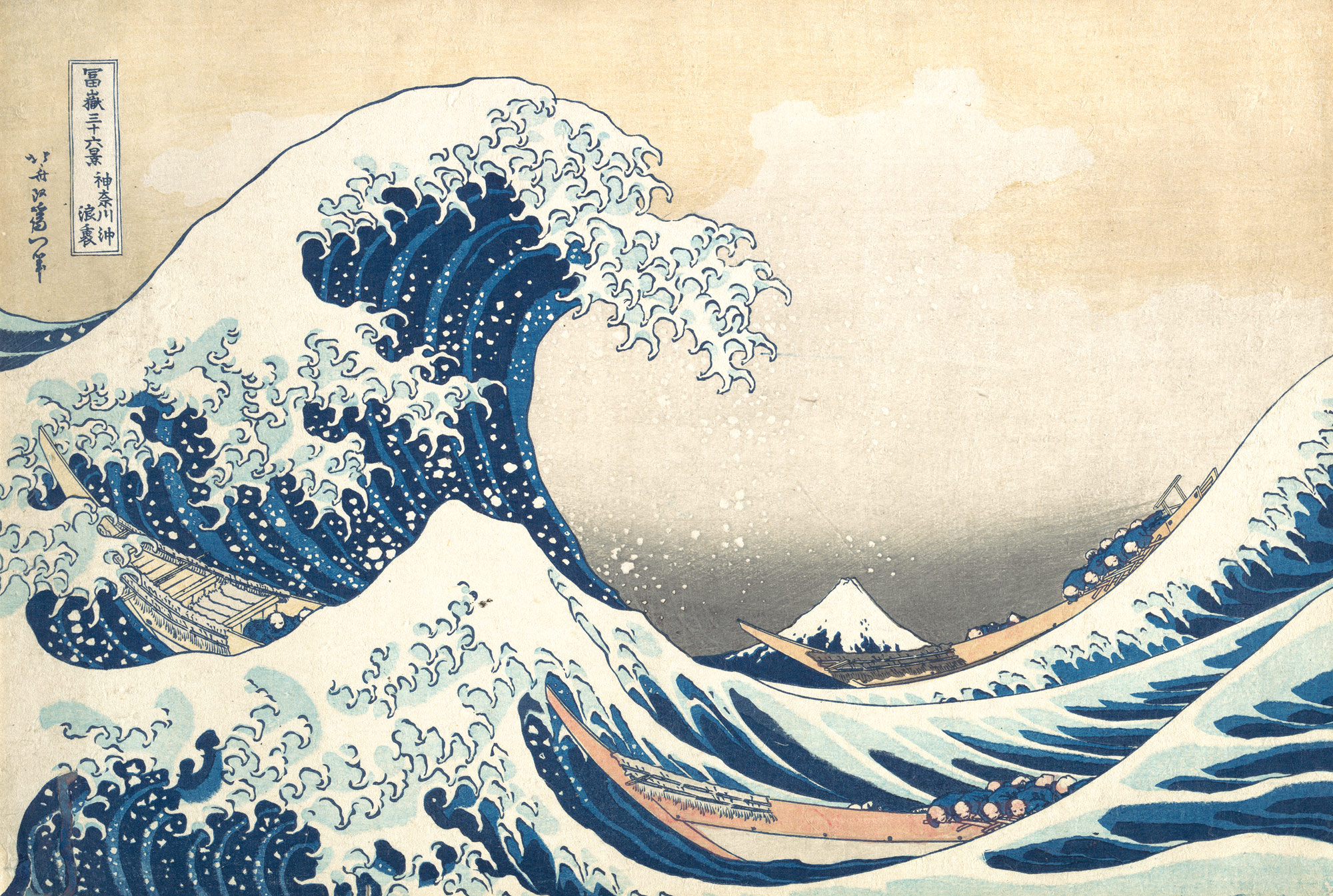
Linguistically, this shift in my thought makes a lot of sense: peoples create metaphor, and even language, based on their surroundings. As an extreme example of this, linguists have noted that most pre-industrial societies did not have a word for or conception of blue; instead, it was lumped in with green, or categorized in different ways entirely. (Cf, http://www.businessinsider.com/what-is-blue-and-how-do-we-see-color-2015-2 and other such reports.) I bring this up as an issue, not because blue is hard to see in every-day life, but to show that a natural concept can seem self-evident, but may not be tangible for a long time. Notably, the Egyptians were one of the only early societies to label blue, and they were the only ones to produce blue dye. Similarly, it is easy to go through the world knowing what waves are, even having seen waves, but unable to really integrate the concept psychologically until in finding a space where they are front-and-center.
This realization is particularly great in aikido, where we seek very subtle physical feelings that may be hard to verbalize. However, I think it is also useful to keep in mind for the every-day. I personally need a change of space fairly frequently to stay fresh in my academic work. Sometimes, this is very literal: working from home instead of the office, working at a coffeeshop instead of at home, working outside, etc. Not everyone has that flexibility however. The other side, I think, is mental space. For me, this means talking to diverse people with different perspectives. For example, I got some of my most vibrant ideas recently from a conversation with a physicist about his ideas of mapping love mathematically. This is a bit extreme, but more mundanely, almost everyone I know complains about how all of their work friends only talk about work. My circle of friends can't be the only ones who think this when they get home! Perhaps by bringing other ideas - news stories, good books, cool scientific discoveries - into conversation, we can all get new perspectives, and find a new vocabulary for dealing with everyday tasks.
It is important to stay fresh, and to seek out different ways of looking at the world. This exposure to difference (physical, mental, emotional, spiritual, whatever...) can only enlarge perspective and understanding. Not every expansion will be useful to every person, but you can only find what does help through the exposure to as much as possible.
But of course, when you're being exposed to the California sun, remember your sunscreen! ;-)
Subscribe to:
Posts (Atom)